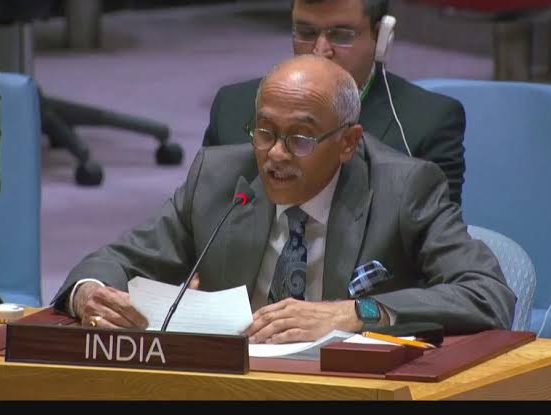

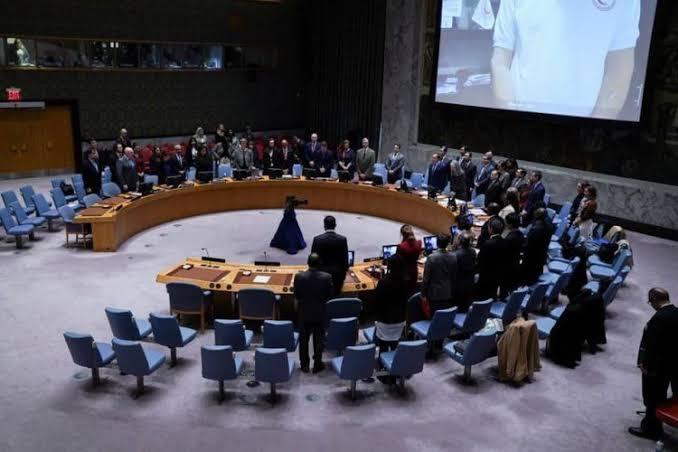
Jerret Gannon, Acting Deputy Special Representative of the UN Secretary-General for Afghanistan (UNAMA), presented a detailed report on the situation in Afghanistan during a meeting of the UN Security Council in New York.
Kabul 24: Gannon, who recently traveled across Afghanistan including to northern provinces, eastern border regions, and remote areas, said he heard a consistent message from the Afghan people.
Returnees, traders, families affected by earthquakes and war, urban and rural communities, as well as women and girls, all complained about increasing humanitarian, economic, and human rights pressures.He noted that on the surface, Afghanistan under Taliban rule enjoys relative stability.
Territorial and administrative control has been consolidated, and there is no serious military or political challenge to the government.
The Taliban consider nationwide security their most significant achievement. However, Afghanistan’s long-term scenarios largely depend on internal dynamics within the current authorities — particularly the tension between hardline ideological policies that impose heavy pressure on the population and more pragmatic approaches that have so far helped sustain the system.
At present, increasing Taliban control without a clear final vision is raising risks and uncertainty.Gannon highlighted five key areas: the political and economic situation, the status of women and girls, the overall human rights situation, regional developments, and the importance of continued coherent international engagement.
On the economic front, macro indicators show signs of stability. Economic growth has been positive in absolute terms, long-term investments in infrastructure have taken place, financial stability has been maintained, and government revenue collection has improved. A significant reduction in opium poppy cultivation was also noted as a positive step.
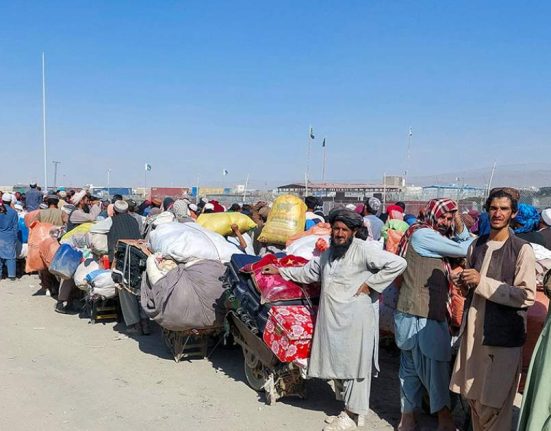
Nevertheless, challenges such as sanctions, regional tensions, and the closure of eastern border crossings since October last year persist.The biggest risk remains intense demographic pressure caused by large-scale refugee returns.
Since 2023, approximately 5.9 million Afghans have returned, increasing the population by more than 10 percent. Up to 2.8 million more may return this year. Many returnees have limited assets and few livelihood opportunities, while the economy lacks the capacity to fully absorb them.
According to the World Bank, Afghans are becoming poorer.Gannon warned that by 2030, more than 25,000 skilled workers could leave the system, severely reducing access to health services and worsening conditions for mothers and children.
Afghanistan remains one of the world’s largest humanitarian crises, with around 21.9 million people — 45 percent of the population — expected to need humanitarian assistance in 2026.
He called on host countries to respect international principles, especially the principle of non-refoulement, and ensure that returns are voluntary, safe, dignified, and supported by sustainable reintegration assistance.
In conclusion, Gannon emphasized the need for constructive engagement and continued dialogue with all parties.