

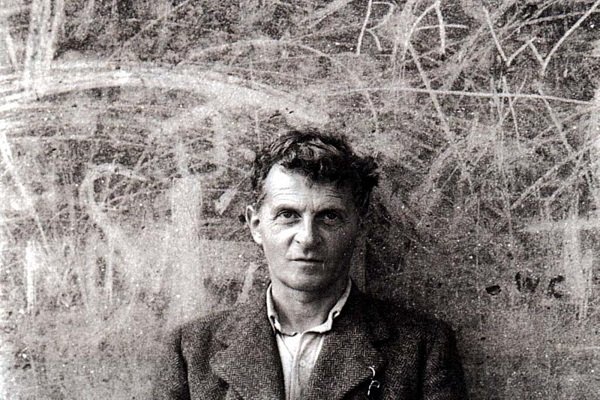
The later Wittgenstein said that the task of philosophy is to untie linguistic knots.
Kabul 24: In his view, many of the things we call “problems” do not arise from the nature of the world, but from the misuse or ambiguity of words.Wittgenstein distinguished between real problems, which concern the world, experience, and facts, and pseudo-problems, which are born of linguistic misunderstanding and grammatical or semantic slips.
When we assume that every important philosophical term — mind, meaning, self, identity — must necessarily refer to a fixed, hidden “essence” behind language, we fall into essentialism and construct questions that are malformed from the very beginning.In contrast stands a kind of linguistic nominalism: Wittgenstein teaches us to seek meaning not in metaphysical essences, but in the actual uses of words within the contexts of life.
From this perspective, we must distinguish between “solving” a problem and “dissolving” it. Solving makes sense only when the question has been properly posed and our descriptive language is clear and precise.
Here science and empirical reasoning step in and provide answers.Dissolution, however, occurs when the philosopher shows that the question itself is the product of conflating different language-games.
We are dealing with a pseudo-problem, not a real one. Many of the famous puzzles — “What is the essence of the self?”, “What is my identity?” — do not need answers so much as they need a kind of linguistic therapy: we must see in which contexts the words are used and where they have been illegitimately pulled out of their proper domain.
It is within this horizon that Wittgenstein saw the meaning of a word in its use, and instead of searching for essences, pointed to the network of usages, to “language-games” and “family resemblances.” When we confuse name and named, when we are oblivious to the relation between words and things, when we mistake a disagreement over words for a disagreement over objects and extrapolate from the level of language to the level of the world, a conflict that is essentially linguistic appears in the guise of an ontological or metaphysical one.
Philosophy, in this sense, is a form of therapy: it does not add new truths to our stock of knowledge; rather, it liberates us from the spell of the words and images that we ourselves have created. It shows us that many of the “knots” were never real knots at all, merely unnecessary twists in the fabric of language.
Rūmī’s tale in the Mathnawī about four people who fall upon one another over a single dirham’s worth of grapes is, in the light of this philosophy, a literary image of precisely this captivity to language. Each utters a different word — angūr, ʿinab, uzum, estafil — yet all want the same thing. They are “heedless because of names” and take a verbal disagreement for a disagreement about the thing itself.Their quarrel is exactly a pseudo-problem, not a real one; the external reality is one and the same, the difficulty lies in the language-game and in ignorance of the diversity of names.
The appearance of that “knower of a hundred tongues” of whom Rūmī speaks performs precisely the task that Wittgenstein assigned to philosophy: by understanding the use of the words in different languages, he does not solve the problem, but reveals that there was no problem in the first place. He ends the fight not by discovering a new truth, but by untying the linguistic knot and dissolving the pseudo-problem.
Jamshid Mehrpur — Kabul