

From the Mississippi to Hormuz: The Return of the Anaconda Plan

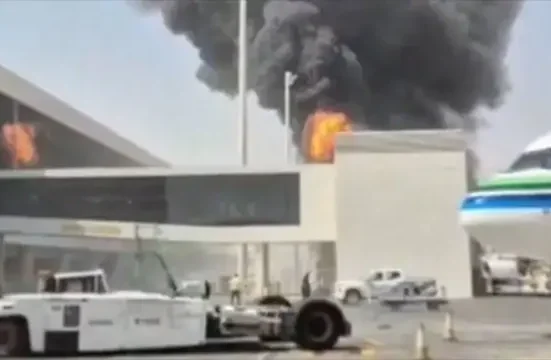
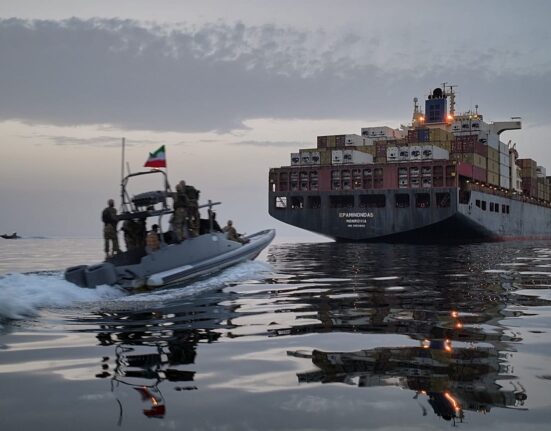
Six months into the war waged by the United States and Israel against Iran, analysts have compared the conflict to numerous historic wars. The Vietnam War and the 1956 Suez Crisis are frequently cited. However, at least in the current phase, this confrontation bears a stronger resemblance to the 19th-century.

Read More

Why a Health Insurance System?

Over the past month, I reviewed recent findings and advancements in the diagnosis and treatment of infectious diseases, particularly bacterial infections. Kabul 24: What struck me most was that despite extensive progress in antibiotic development, major international guidelines still recommend older, narrower-spectrum antibiotics—such as penicillins, first-generation cephalosporins, tetracyclines, and co-trimoxazole—as.

Read More

Self-incurred captivity

In his essay “Answering the Question: What is Enlightenment?”, Immanuel Kant defines enlightenment as man’s emergence from his self-incurred immaturity: the inability to use one’s own understanding without guidance from another. Kabul 24: As Kant himself emphasizes, the cause of this immaturity lies not in a lack of understanding, but.

Read More

The Boundary Between Theory and Ideology

Having a “theoretical framework” is not equivalent to holding an “ideology.” When we say someone holds an ideological view toward phenomena and issues, it means they approach reality with a pre-established, relatively dogmatic conceptual structure, comprehending phenomena primarily within the narrow boundaries defined by that framework. Kabul 24: In such.

Read More

The Western Cowboy and the Ottoman Gunslinger’s Gift

At the sidelines of the recent NATO summit, Recep Tayyip Erdoğan surprised his Western counterparts with an unusual gift. He presented each participating leader with a Gümüşhane pistol manufactured by the Turkish defense company MKE, along with six live rounds — a gesture rarely seen in diplomatic protocol between heads.

Read More

Strait of Hormuz: Closed Again Before It Was Truly Opened?

Strait of Hormuz closed again! Just three days after the nominal reopening of this waterway to vessel traffic, Iran’s military command announced minutes ago that it will close the strait once more. Kabul 24: The continuation of Israeli army attacks in Lebanon is cited as the main reason for this.

Read More

The Dialectic of Desire in Žižek’s Perspective

Human beings are always subjects of lack and, therefore, always desiring subjects. We desire something and mistakenly believe that this object has an external, real counterpart. In truth, however, this object is merely a fantasy constructed to fill the terrifying void at the heart of our existence. Kabul 24: Desire.

Read More

Bombing Beirut and Shooting at the Agreement

With today’s attack on Beirut, Israel has, in popular parlance, tried to “pull the cat by the tail before the wedding.” While the countdown to signing the Iran-US understanding had begun, today’s noon strike on Beirut’s southern suburbs directly challenged it. Kabul 24: This attack has exposed the fragile and.

Read More

In Limbo: Neither War Nor Ceasefire

With Iran’s missile attacks on Israel tonight, the fragile existing ceasefire has become even more invalid. Kabul 24: Based on what we have witnessed so far, Iran’s response is more than just a symbolic strike. The successive, low-volume missile barrages toward Israel carry a specific message. It appears that the.

Read More

Why We Need to Understand the Form of Mythical Thinking

Our need to understand the form of mythical thinking is, before anything else, an epistemological necessity for comprehending the modern mind — not merely an exploration of humanity’s past. Kabul 24: Just as Ernst Cassirer began his analysis of the philosophy of the Enlightenment by examining the form of thought.

Read More

Big Brother Who Is Also Grandma!

Sixty years have passed since the beginning of China’s Cultural Revolution — a period of madness in the history of the Communist Party that came to a halt after ten years with the death of its founder and leader, Mao. Kabul 24: In our own language, the Proletarian Cultural Revolution.

Read More

Methodological Pluralism

Method and methodology form the cornerstone of systematic and reliable knowledge. For encountering truth requires a structured, verifiable, and—to the greatest extent possible—replicable path. Kabul 24: Although humans sometimes attain a layer of truth through revelation, intuition, or transcendental experiences and bring the “real” into the realm of the “symbolic.

Read More