
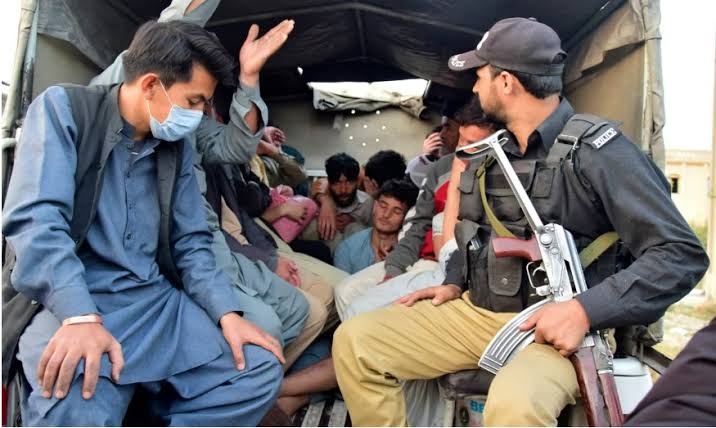
The United Nations High Commissioner for Refugees (UNHCR) and the International Organization for Migration (IOM) have reported in a joint update that a total of 7,015 Afghan nationals were arrested and detained in Pakistan between January 1 and January 31, 2026.
Kabul 24: This figure highlights the ongoing intensification of Pakistan’s crackdown on undocumented and irregularly staying Afghan migrants under its “Illegal Foreigners’ Repatriation Plan.”According to the data, the highest number of arrests occurred in Balochistan province, where 3,713 individuals were detained—accounting for more than half of the monthly total.
Balochistan, due to its long border with AfghanistaAfghanistan National Futsal Team Eliminated from AFC Futsal Asian Cup After Heavy Defeat to Japan and large Afghan population, has consistently recorded the majority of such cases. Other significant locations included Islamabad Capital Territory and Khyber Pakhtunkhwa.
Afghan migrants living in Pakistan continue to express deep concern over persistent mistreatment, night raids, extortion by police, arbitrary detentions, and forced deportations. Many are calling for an extension of deadlines to allow for voluntary and dignified returns, rather than coercive measures that leave families in distress amid harsh winter conditions and economic hardship.
Allah Mir Miakhil, an Afghan migrant rights activist based in Pakistan, appealed to the Pakistani government: “We urge the authorities, in light of our long-standing neighborly and historical ties, to refrain from aggressive expulsion actions against the remaining Afghan migrants and instead take meaningful steps to support them.”In a related development, Afghanistan’s Ministry of Refugees and Repatriation recently announced the release of over 100 Afghan detainees from Pakistani prisons.
Last week alone, 153 individuals were freed from custody and subsequently returned to Afghanistan. While such releases provide temporary relief, officials note that the overall number of detained Afghans remains far higher.
This wave of arrests comes amid a broader deportation campaign that began in late 2023. Cumulative UNHCR-IOM figures show that nearly two million Afghans have returned or been deported from Pakistan since September 2023, with the pace continuing into 2026.
Fear of arrest remains the primary driver (over 99% in many reports) for both voluntary and forced returns, compounded by financial pressures and lack of legal protections.Human rights organizations and UN agencies have repeatedly urged Pakistan to halt mass arrests and ensure deportations comply with international standards, including non-refoulement principles.
However, Pakistani authorities maintain focus on implementing repatriation policies, creating significant humanitarian challenges for thousands of Afghan families caught between uncertainty in Pakistan and instability in Afghanistan.