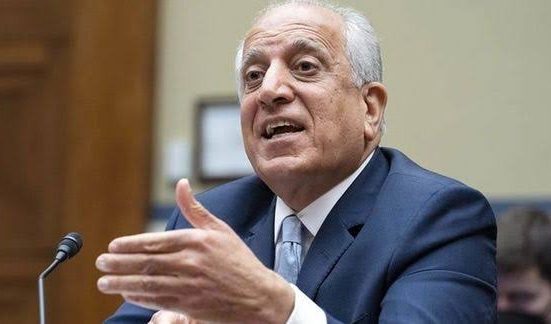

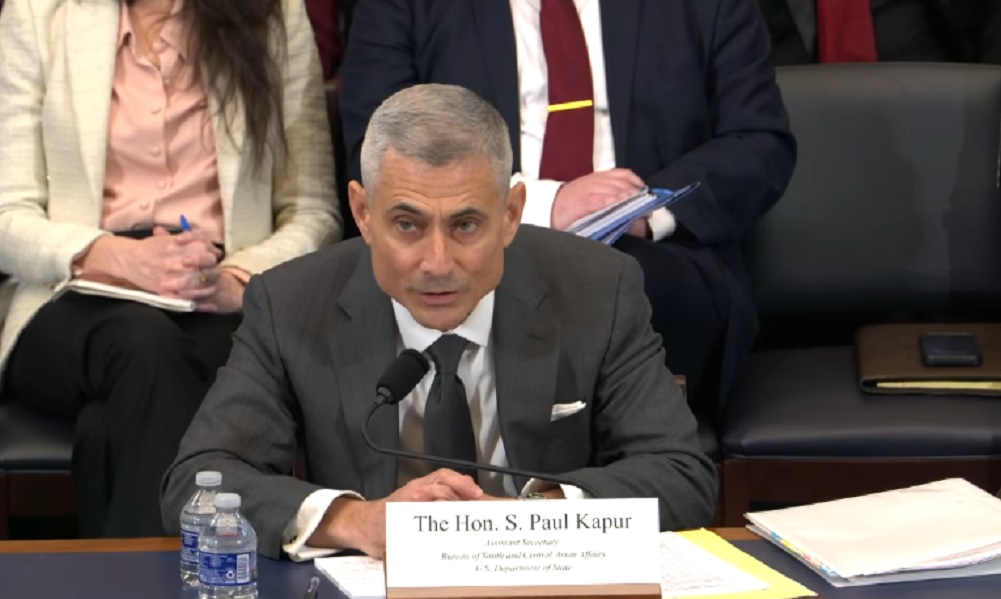
S. Paul Kapur, U.S. Assistant Secretary of State for South and Central Asian Affairs, testified before the House Foreign Affairs Subcommittee on South and Central Asia on Wednesday, February 11, 2026, that the United States is conducting an ongoing review of its policy toward Afghanistan.
Kabul 24: Kapur described the process as interagency, involving multiple departments and covering various aspects of U.S. engagement in the region. He stated that no specific timeline for completion could be provided, but pledged to keep Congress informed and transparent throughout the review.
The hearing highlighted concerns over the fate of Afghan nationals awaiting resettlement, particularly those in a processing facility in Qatar. Lawmakers from both parties questioned the State Department’s plan to close the site, as well as recent payments offered to some Afghans for voluntary repatriation.
Kapur confirmed that around 150 individuals had accepted such payments, emphasizing that returns were voluntary and not forced.
He added that the U.S. is pursuing relocation options to third countries for others.Democrats on the subcommittee described the payments and camp closure as a “betrayal” of Afghan allies who supported U.S. efforts during the 20-year presence.
Kapur reiterated that no forced repatriations are occurring and that negotiations continue for alternative destinations.Broader discussions touched on U.S. priorities in South Asia, including support for education and equal opportunities for women and girls in the region, as well as economic and security cooperation with neighboring countries like Pakistan.
The review occurs amid ongoing debates over the 2021 U.S. withdrawal from Afghanistan, including criticism of decisions to abandon key military assets and equipment.
President Trump has repeatedly described the exit as poorly executed, and the current administration appears focused on reevaluating assistance programs, relocation pathways for Afghan partners, and regional counterterrorism efforts without direct commitments to governance issues inside Afghanistan.
Experts note that the outcome may involve reduced direct involvement, tighter controls on humanitarian aid to prevent misuse, and emphasis on security cooperation with regional partners. No final decisions have been announced, and the process remains active with congressional oversight.