
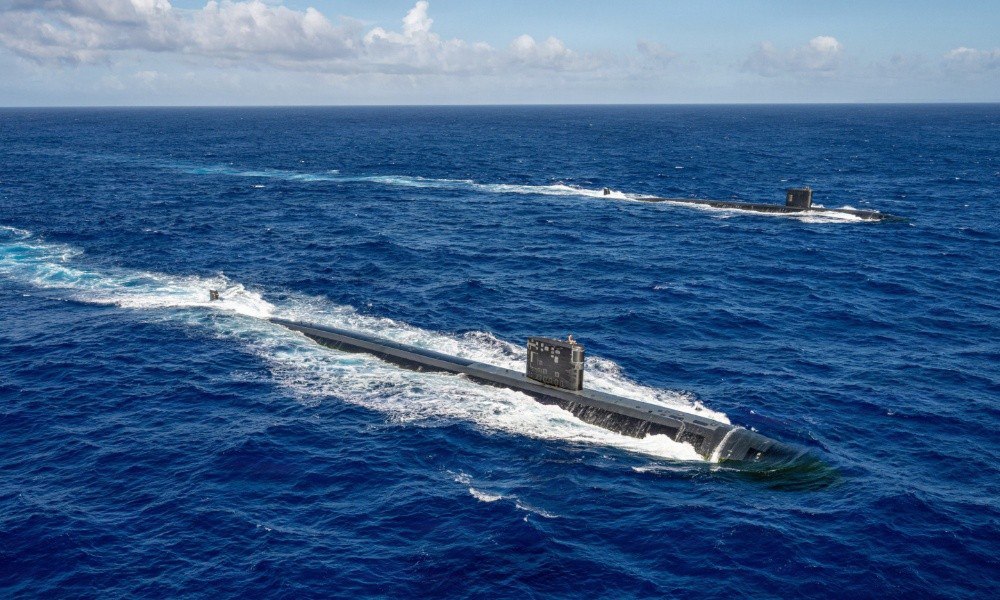
In a significant escalation of the ongoing war between the United States and Iran, a U.S. Navy submarine sank the Iranian frigate IRIS Dena in the Indian Ocean, approximately 200 nautical miles south of Sri Lanka, on Wednesday, March 4, 2026.
Kabul 24: The attack has resulted in at least 80 confirmed deaths among the crew, with 148 sailors still listed as missing and presumed dead.Sri Lankan naval authorities reported that 32 severely injured crew members were rescued by Sri Lankan Navy and Coast Guard vessels and transported to hospitals in Colombo and Galle.
Rescue operations involving Sri Lankan air and sea assets continue, though officials stated that hopes of finding additional survivors have “substantially diminished” due to rough seas, extreme depth in the area (over 3,000 meters in places), and the time elapsed since the sinking.U.S. Secretary of Defense Pete Hegseth confirmed the operation during a Pentagon press briefing. “A U.S. submarine engaged and sank an Iranian frigate that believed it was operating safely in international waters,” Hegseth told reporters.
He described the strike as “a clear demonstration of America’s unmatched global power projection” and noted that it marked the first time since World War II that a U.S. submarine had sunk an enemy surface combatant with torpedoes in combat.
The IRIS Dena, a Moudge-class frigate commissioned in 2021, carried a crew of approximately 180 personnel. The vessel had recently participated in the multinational MILAN 2026 exercise hosted by India in Visakhapatnam and was en route back to Bandar Abbas when it was attacked. U.S. officials have not released the name of the submarine involved or detailed the specific rules-of-engagement rationale that led to targeting the Iranian warship.
The Pentagon has so far declined to confirm the exact casualty figures reported by Sri Lankan and international media sources, citing the ongoing nature of search-and-recovery efforts and intelligence sensitivities.
However, multiple outlets, including Reuters, citing Sri Lankan defense ministry briefings, have placed the confirmed death toll at a minimum of 80, with the number expected to rise as operations conclude.
Iranian state media and military spokespersons have not yet issued a comprehensive official statement, though preliminary commentary from Tehran has labeled the incident “state terrorism at sea” and a “grave violation of international law and freedom of navigation.” Analysts expect a strong diplomatic and potentially military response from Iran in the coming days.
The attack has dramatically expanded the geographic scope of the U.S.–Iran conflict, previously concentrated in the Persian Gulf, Strait of Hormuz, and Red Sea.
Maritime security experts warn that the incident could disrupt commercial shipping lanes in the northern Indian Ocean, increase insurance premiums for vessels transiting the region, and force merchant fleets to consider longer, more expensive routing around the conflict zone.
Sri Lanka’s Foreign Ministry expressed “deep concern” over the presence of active naval combat so close to its exclusive economic zone and called for an immediate de-escalation and respect for neutral states.
India, which hosted the MILAN exercise Dena had just attended, has remained silent on the matter so far.Search and recovery efforts are expected to continue for several more days. Until then, the final human cost of the sinking of IRIS Dena remains uncertain—but already tragically high.