
Rewritten Text (approximately 350 words):The Israel Defense Forces (IDF) officially confirmed that, in an overnight aerial operation on Saturday, its aircraft struck several fuel storage facilities in the city of Tehran.
Kabul 24: Described by the IDF as “a significant blow,” the attack targeted depots that Israeli officials claim are regularly and directly used by the Iranian regime to supply fuel to military infrastructure and operations.
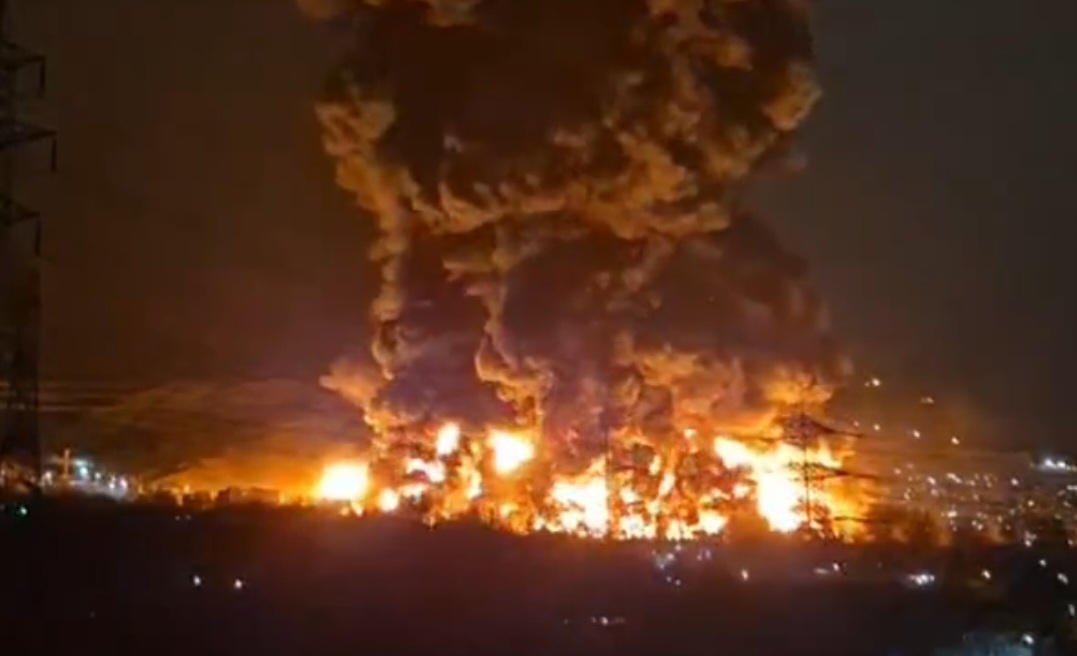
Videos and photos circulating on social media and shared by Tehran residents showed enormous flames and thick columns of black smoke rising over parts of the capital after dark.
Witnesses reported hearing powerful explosions and feeling building tremors in western and southern districts of Tehran, including areas near Shahran, Kahrizak, and several storage sites linked to the National Iranian Oil Company.
According to the IDF statement, these particular fuel reserves play a critical role in the distribution of petroleum products to Iran’s armed forces and affiliated militias.
The military emphasized that the strikes form part of a broader campaign to degrade the operational capabilities of the Islamic Republic and to remove direct threats to Israeli security.
An IDF spokesperson stated that the air force “will continue to act decisively to neutralize infrastructure that sustains aggression against Israel and its allies.”The attack comes as the ongoing Israel–Iran conflict enters its second week, marked by intensified Israeli airstrikes deep inside Iranian territory.
In recent days, Israeli jets have targeted missile production sites, nuclear-related facilities, command centers, and now energy infrastructure in and around Tehran.
In response, Iran has launched waves of ballistic missiles and drones toward Israel, U.S. bases in the region, and—in some cases—neighboring countries hosting American forces.Iran’s Oil Ministry acknowledged that “certain fuel storage facilities” in Tehran and Alborz provinces were hit, though it downplayed the extent of damage and disruption to domestic supply.
Energy analysts warn that sustained strikes on fuel depots could severely strain Iran’s domestic distribution network, drive up global oil prices, and exacerbate the country’s already acute economic and humanitarian challenges.
Many observers view the targeting of energy infrastructure as a deliberate escalation designed to impose heavy economic pressure on Tehran and potentially broaden the conflict beyond strictly military targets