
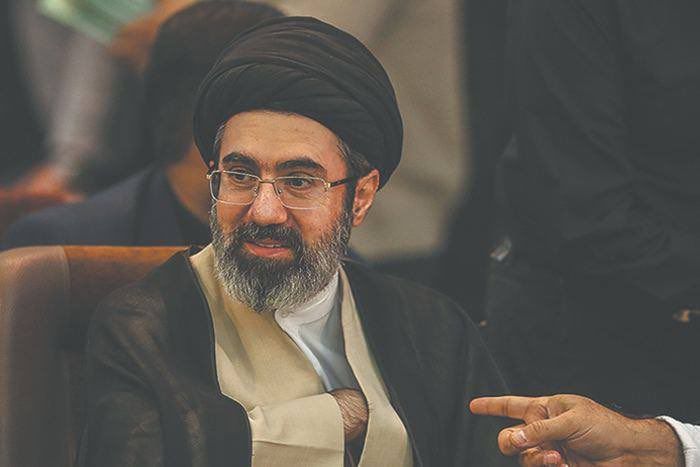
The Kuwaiti newspaper Al-Jarida reported, citing a high-ranking source close to Mojtaba Khamenei’s inner circle, that Iran’s newly appointed Supreme Leader was secretly transferred to Moscow for urgent medical treatment following injuries sustained in joint U.S. and Israeli airstrikes on the leadership headquarters (Beit-e Rahbari) on the first day of intensified conflictThursday, February 28, 2026 (9 Esfand 1404).
Kabul 24: According to the source, the severity of Mojtaba Khamenei’s wounds necessitated advanced surgical intervention and specialized care that could not be safely or adequately provided inside Iran amid the ongoing war and heightened security threats.
Russian President Vladimir Putin personally proposed the evacuation and arranged for Khamenei to be transported covertly aboard a Russian military aircraft under heavy security protocols.
Upon arrival in Moscow, he reportedly underwent successful surgery and is currently under intensive medical supervision and recovery in a highly secure, private facility believed to be associated with one of Russia’s presidential medical complexes or protected residences.Mojtaba Khamenei, approximately 56 years old, was designated Supreme Leader by the Assembly of Experts shortly after his father Ali Khamenei was killed in an Israeli missile strike earlier in March 2026.
Sources indicate that Mojtaba himself was injured either in the same attack or in subsequent strikes targeting the same compound.
The story has spread rapidly across Persian-language media, social networks, opposition outlets, and international Persian services including Euronews Persian and various independent news aggregators.
Al-Jarida, known for publishing exclusive reports often based on anonymous sources from Gulf states or Iranian opposition circles, provided no additional evidence or documentation.
Neither Iranian state media, Russian officials, nor any Tehran-based authority has commented on or confirmed Khamenei’s location, health status, or the alleged transfer.
If accurate, the report highlights the depth of Iran-Russia strategic coordination during the current regional crisis and raises questions about leadership continuity and internal power dynamics in Tehran under extreme external pressure.
However, in the absence of independent verification or official statements, the claim remains unconfirmed and circulates primarily as intelligence-sourced speculation amid widespread wartime disinformation and fog-of-war reporting.