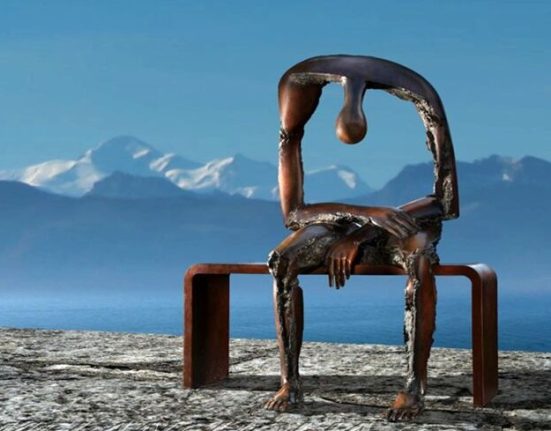

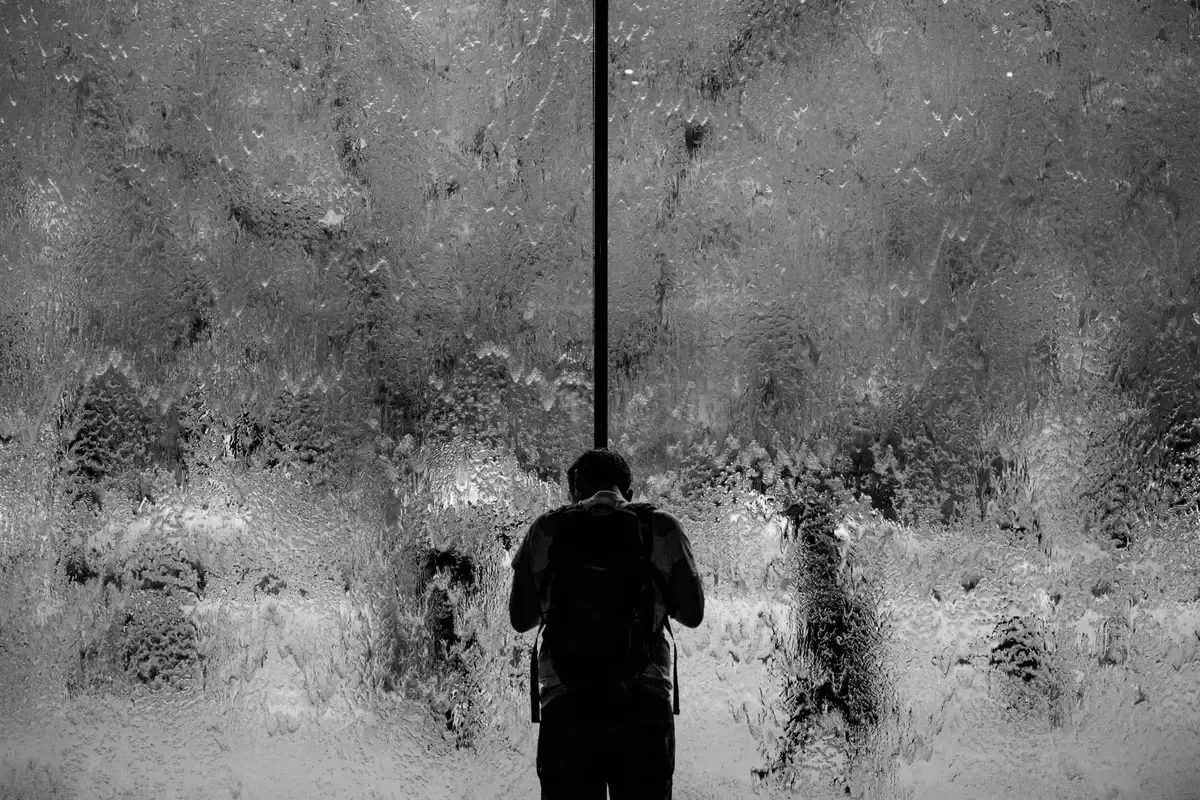
Why do I suffer? What is supposed to emerge from the heart of my suffering? Some result in my hopes for the future, like a lighthouse, like a promise, justifies my suffering from afar so that I can endure it. Has there ever been anyone who has not suffered? Is there a dead person in history who never suffered?
Kabul 24: The question stretches even further: Has there ever been anything that has not suffered? An animal. A plant.Cable 24: Suffering, if it is another name for an unwanted relation between me and what I do not want, then every fragment of the world is inevitably a fragment that suffers.
The direction of the will of the world’s totality is never, even for the span of one lifetime, aligned with my own will.Wherever these two wills are out of parallel, I suffer. Suffering is not the foundational experience, but it is the inevitable experience of my being-in-the-world; as long as I am among the things of the world, each of which has its own will, a desire for something personal.Out of harmony with my desire. What can be done with this inevitability?
I cannot not suffer. So I must do something with the sufferings I endure. — But what?Somewhere in The Twilight of the Idols, I remember Nietzsche wrote that it is not suffering itself that torments us, but the meaninglessness of suffering that does the work.For the human — that meaning-addicted animal — there is always something surplus to things, something beyond this glass and chair and wall and suffering, which apparently constitutes their “meaning.”
But where is this meaning? Somewhere in the sky? Somewhere in the corridors of language? — Meaning occurs in the relation between me and this or that thing.Not something entirely within me or within the thing opposite me, but in the relation between us. — What if the suffering we endure has no meaning? What if our suffering is nothing more than this very suffering we endure?
Empty suffering. Suffering of meaninglessness that points to nothing beyond itself.Sometimes my suffering saves someone, sometimes it bears fruit in the future, but do all my sufferings have meaning? I justify my meaningful sufferings for myself with every trick, every lie, every name other than “suffering.” But what should I do with my meaningless sufferings, with my self-contained sufferings?
What torments is not the suffering itself, but the meaninglessness of my suffering. I want to leap out of my suffering, to go outside, to reach something else, but my suffering has no window to the outside. My suffering gives no meaning.
Yet this framework falters when all the elements of my life only find meaning in the presence of death. Every small or large act I do, the house I build, the tree I plant, the text I write, becomes meaningful only in relation to death.The immense anxiety of death forces me to leave behind indelible signs of myself [who is certainly mortal], so that I may continue even after my own death. So that I may have a sequel. Death is absolute oblivion.
All my actions are for postponing the date of death or leaving a legacy so that I will be remembered after death. In the shadow of death, I give meaning to the things around me and the works at hand. In the constant threat of its arrival.The meaning of things for me appears only when they are placed within the totality of my life [a span saturated with death].
Only by situating every particular within the totality of my life can I make it meaningful for myself, and this totality is besieged by death and oriented toward death.Every particular becomes meaningful only within the context of a larger whole. In relation to it.
But in the shadow of death, which holds perpetual dominion over the totality of every person’s life, how can one still speak of the meaning of this or that suffering?
That I suffer today, or that you suffered yesterday — what meaning does this have in the shadow of this inevitable death? — You suffer, you suffer, you suffer, and in the end you die. Do any of the small personal sufferings of the dead have meaning?
The dead person who was tormented by a lie, the dead person who lost something, the dead person who was betrayed. He himself remembers nothing of his suffering, nor do we who walk over his grave.
The sufferings are over. The relation between him and what he did not want has been severed. His suffering no longer exists, nor does it have any surplus or meaning.None of our sufferings — these petty personal torments that shape our souls — have any meaning in the face of death and under its heavy, forgetful shadow. The earthquake of death will collapse the architecture of my life.
Without me, my suffering will not exist to have any meaning.We will be forgotten along with our sufferings; with all our small daily torments and nightly nightmares.
And the world will remain subject to the law of the conservation of suffering: sufferings will remain indivisible. And all the objects and living beings after us, just as they suffered before us, will suffer still.