
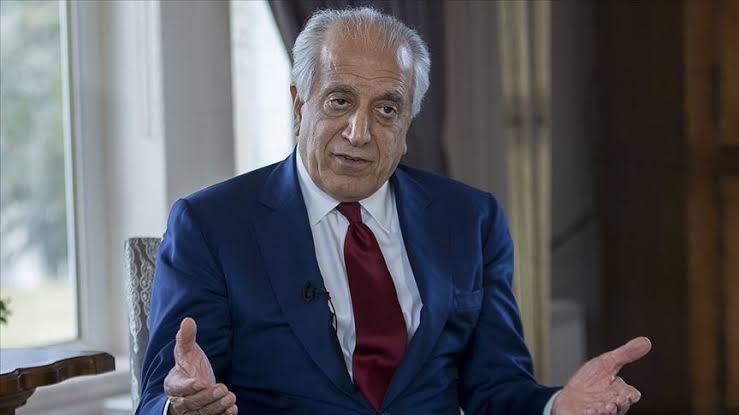
Zalmay Khalilzad, former U.S. Special Representative for Afghan Peace, has warned that Pakistan is likely to hold Afghanistan responsible for the killing of eight Pakistani security personnel in a truck bomb explosion in Khyber Pakhtunkhwa province.
Kabul 24: In a post on X (formerly Twitter), Khalilzad expressed concern that this incident could sharply escalate tensions between Islamabad and Kabul, potentially increasing the risk of a real military confrontation between the two neighboring countries.
He wrote: “It is painful to see the repetition of old patterns that in the past have brought nothing but grief and suffering. This path will not lead to any positive outcome.” Khalilzad also extended his condolences to the families of the slain Pakistani soldiers.
Highlighting the missed opportunities, he pointed out that a completely different and better future is within reach for both nations: “An economic partnership between Afghanistan and Pakistan that can bring prosperity and development to the people of both countries.”Khalilzad renewed his long-standing call for a negotiated solution.
He proposed a new agreement between Afghanistan and Pakistan in which both sides commit not to allow their territory to be used by individuals or groups to threaten the security of the other.
He stressed that such an agreement should be monitored by a trusted third party.“I repeat this proposal again,” he said. “Pakistan and Afghanistan are on a disastrous path. They must make a bold change.
I hope they have the ability to do so.”These remarks come amid sharply deteriorated relations between the two countries. Pakistan has repeatedly accused the Islamic Emirate in Kabul of sheltering anti-Pakistan militant groups, particularly the Tehrik-i-Taliban Pakistan (TTP).
Afghanistan, in turn, has denied the accusations and accused Pakistan of cross-border interference and supporting attacks inside Afghanistan.
The truck bomb attack in Khyber Pakhtunkhwa, a volatile region near the Afghan border, has further inflamed the situation. Analysts believe the cycle of accusations, border clashes, and militant attacks not only threatens regional stability but also blocks vital trade and economic cooperation between the two neighbors.
With his extensive experience in Afghan and regional diplomacy, Khalilzad argues that the only viable way out of the current crisis is a return to serious negotiations leading to a comprehensive security and economic agreement backed by international guarantees.
He believes both countries must choose between continued confrontation — which benefits no one — and a bold shift toward cooperation that serves the long-term interests of their peoples.