
Sixty years have passed since the beginning of China’s Cultural Revolution — a period of madness in the history of the Communist Party that came to a halt after ten years with the death of its founder and leader, Mao.
Kabul 24: In our own language, the Proletarian Cultural Revolution in China was something equivalent to the continuation of the revolution, a second revolution, revolution within the revolution, and the deepening and purification of the revolution.
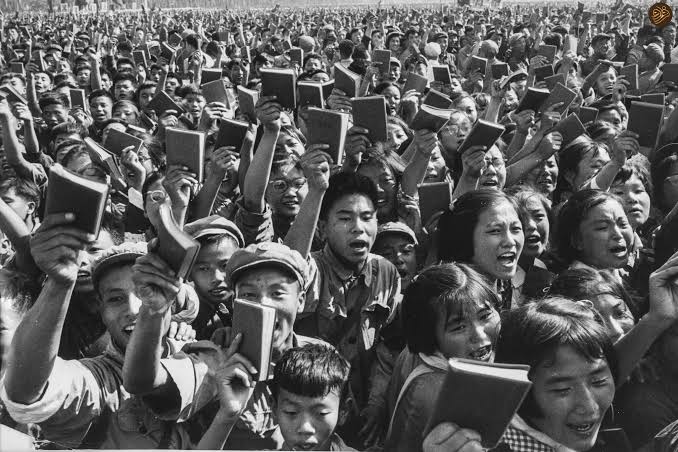
Mao’s campaign officially began in May 1966 under the title of combating the return of capitalism to China and eliminating bourgeois manifestations from the public and private spheres.Hundreds of millions of copies of Mao’s Little Red Book, a collection of his selected quotations, were printed and distributed.
The book became the holy scripture for millions of Red Guards, who, following its instructions, launched an assault on urban life and civil society.
They humiliated China’s cultural heritage, placed dunce caps on the heads of intellectuals, and by preferring the village over the city and manual labor over intellectual and cultural activity, they essentially sought to unify the country on the basis of ideological norms and eliminate the middle class.After ten years, what emerged was nothing short of a complete disaster.
Millions were displaced, hundreds of thousands died of famine, and China’s politics, economy, culture, and bureaucracy suffered an unprecedented decline.Mao’s death in 1976 put an end to this chaos and turmoil.
The rise of the reformist leader Deng Xiaoping and the revision of some ideological principles were largely a consequence of this catastrophe.
Deng gradually and steadily set aside the command economy, opened the doors to foreign trade and investment, and, drawing lessons from the disasters of Mao’s personal dictatorship, tried to restrain individual leadership and make the decision-making process more collective and flexible.
Deng’s economic reforms, in the absence of political liberalization, gradually transformed China’s face over nearly half a century.
The country is now the world’s second-largest economy and an emerging global power.If the current growth rate continues, it is not far off that within a few years this country will become the world’s largest economy a position China held in 1800, before the century of humiliation and confrontation with European imperialism.
The Party is still considered Big Brother in the Orwellian sense and maintains complete control over society, politics, and the economy.
But its difference from the Mao era is that it simultaneously plays the role of Grandma as well.In Chinese state propaganda, the words “warmth” and “fullness/satiety” are repeatedly used. They refer to China’s great economic leap, the liberation of hundreds of millions from the grip of poverty, and their entry into the middle class.
These two keywords form an important part of the new social contract that the Party concluded with the people after the 1978 reforms.
If the people remain obedient and submissive to Big Brother and listen to its advice and orders in the cultural and political spheres, they can enjoy the benefits of the country’s growing wealth.
In the absence of usual political participation and civil rights, they can enjoy individual freedoms — something that was impossible in the past and which the Communist Party had condemned as bourgeois morality.
In a sense, the Party has reduced what it once demanded from the people — absolute obedience and transformation into “new socialist humans” — to a form of political passivity and indifference, with some concessions.
This leniency is not unrelated to the reduced importance of ideology in governance.Government controls, both visible and invisible, are in some cases even stricter than in the Mao era.
The Communist Party has set aside the first part of Marxist-Leninist ideology and has modernized and digitized the second part. What governs China today — known as the Beijing Consensus — is a combination of digital Leninism and state capitalism.
This model is regularly praised by right-wing nationalist and populist governments and parties around the world, who highlight its superiority over the Washington Consensus.
The Washington Consensus refers to the combination of liberal government and market economy, which in recent years has faced major challenges and erosion.In short, the ruling Chinese Party, unlike the past, is not just a strict and calculating Big Brother.
It is also a kind and benevolent Grandma. In the current conditions of liberal democracy’s retreat and the economic decline of core countries, this combination currently seems effective.
The Party has even managed to keep the internet giants and modern communication technologies and artificial intelligence firmly in its grasp without any damage to its control over society.
The main challenge, however, remains ensuring the continuation of economic growth and avoiding political and security traps resulting from an aggressive and interventionist foreign policy.
China faces population aging and decline, and it is about to lose some of the economic advantages gained from its integration into the global economy. This issue, along with the requirements of changing the global order, could turn into a potential challenge.
Salahuddin Khadiv