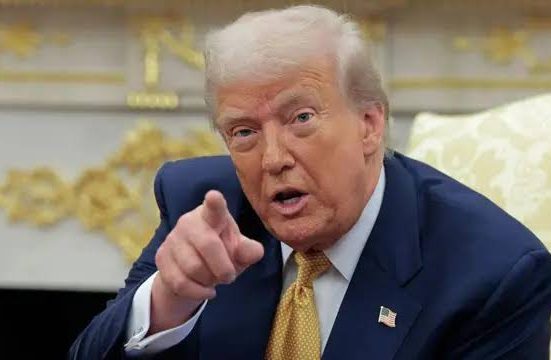

Senior U.S. military officials have privately informed the leadership of a key American ally in the Middle East that President Donald Trump may soon authorize a military strike against Iran, with potential operations beginning as early as Sunday.
Kabul 24: This alert, confirmed by multiple sources to Drop Site News, reflects a sharp escalation in regional tensions amid ongoing U.S. military buildup and failed diplomatic efforts.The warning extends beyond a single ally, as intelligence agencies in several Arab nations have received similar messages indicating an imminent U.S. action.
A former senior U.S. intelligence official, who serves as an informal advisor to the Trump administration and consults for Arab governments, stated that the primary objective is not limited to Iran’s nuclear or missile programs. Instead, planners aim for regime change in Tehran.
The strategy involves targeting nuclear facilities, ballistic missile sites, and other military infrastructure while simultaneously striking leadership elements of the Islamic Revolutionary Guard Corps (IRGC) to disrupt command structures and potentially trigger internal collapse or widespread unrest.In recent weeks, the United States has significantly reinforced its military presence in the region.
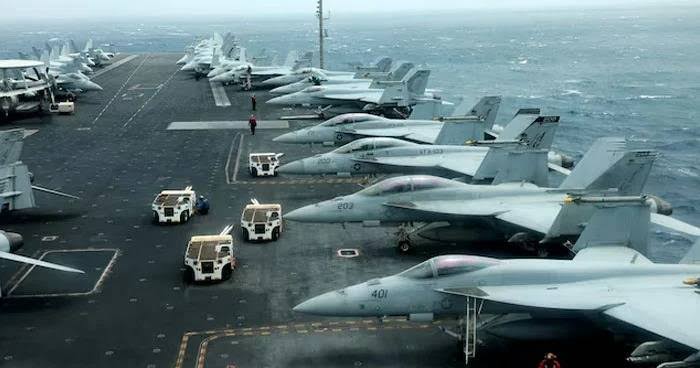
The aircraft carrier USS Abraham Lincoln, accompanied by guided missile destroyers and additional assets, has been deployed alongside thousands of extra troops, F-15E fighter jets, and extensive exercises demonstrating readiness.
President Trump has publicly described this force as a “massive armada” or “flotilla” heading toward Iran, emphasizing that U.S. forces are “ready, willing, and able to rapidly fulfill their missions with speed and violence if necessary.” He has repeatedly urged Iran to negotiate a new agreement eliminating its nuclear capabilities, warning that time is running out and any future U.S. response would be “far worse” than previous strikes, including those in June targeting nuclear sites.Iran has responded by elevating its military alert status and issuing strong warnings.
Iranian military spokespersons have stated that U.S. bases across the region, along with Israel, lie within range of medium- and long-range missiles. Tehran has vowed a “decisive and deadly” retaliation to any aggression, describing readiness for direct confrontation.
Some analysts view the current standoff as largely psychological and coercive pressure rather than confirmation of an inevitable attack, but the lack of diplomatic progress—combined with tacit support from certain regional partners for limited action—has heightened the risk of conflict.
Gulf Arab states such as Saudi Arabia and the UAE express concern over potential regional instability and have reportedly resisted providing airspace for large-scale operations, though some accounts suggest quiet acquiescence to more contained strikes. Trump’s unpredictable decision-making style remains a key factor, as he has shown willingness to act decisively without full alignment from allies.
This volatile situation places the Middle East on the brink of one of its most critical moments in recent years. Any final decision by President Trump could profoundly impact not only Iran’s future but also the regional balance of power and global economic stability, particularly energy markets.