
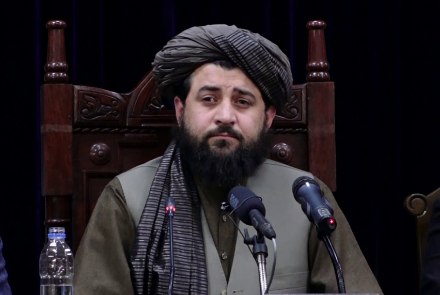
Mullah Mohammad Yaqoob Mujahid, the Acting Minister of Defense of the Islamic Emirate of Afghanistan, emphasized the importance of providing both religious and modern (contemporary) education to children during a madrasa graduation ceremony in the Sang-e-Hisar area of Zhari District, Kandahar Province. He urged citizens not to hinder their children’s education and to support existing schools and madrasas.
Kabil 24: In his speech, the Minister noted that security forces, police, and military personnel serve the people—guarding borders while also ensuring safety in schools, madrasas, and commercial areas. He stated: “Our request to you is to support the schools and madrasas established for you.
Whether religious or contemporary education, you must create opportunities for your children to study.”This focus reflects the Islamic Emirate’s efforts to balance traditional Islamic values with modern societal needs. Observers see it as recognition of current challenges and an attempt to bridge tradition and modernity.shutterstock.com
University professor Javid Momand remarked: “For Afghanistan to progress alongside other nations, expanding knowledge and literacy is essential.
This applies equally to men, women, and girls. Sustainable education, particularly in remote areas, must be prioritized.”Political analyst Mohammad Aslam Danishmal added: “Knowledge is a core societal need, and authorities should facilitate scientific advancement.
Inter-ministerial coordination is vital, with concrete steps needed to reopen schools and universities for Afghan women and girls.”Since recent political shifts in Afghanistan, debates on religious and contemporary education have become central to domestic and regional discussions.
Officials’ emphasis on balanced learning, combined with security measures, signals intent to build a new educational and social framework.
This strategy, amid economic, cultural, and international challenges, may help narrow generational divides and foster greater social unity.