

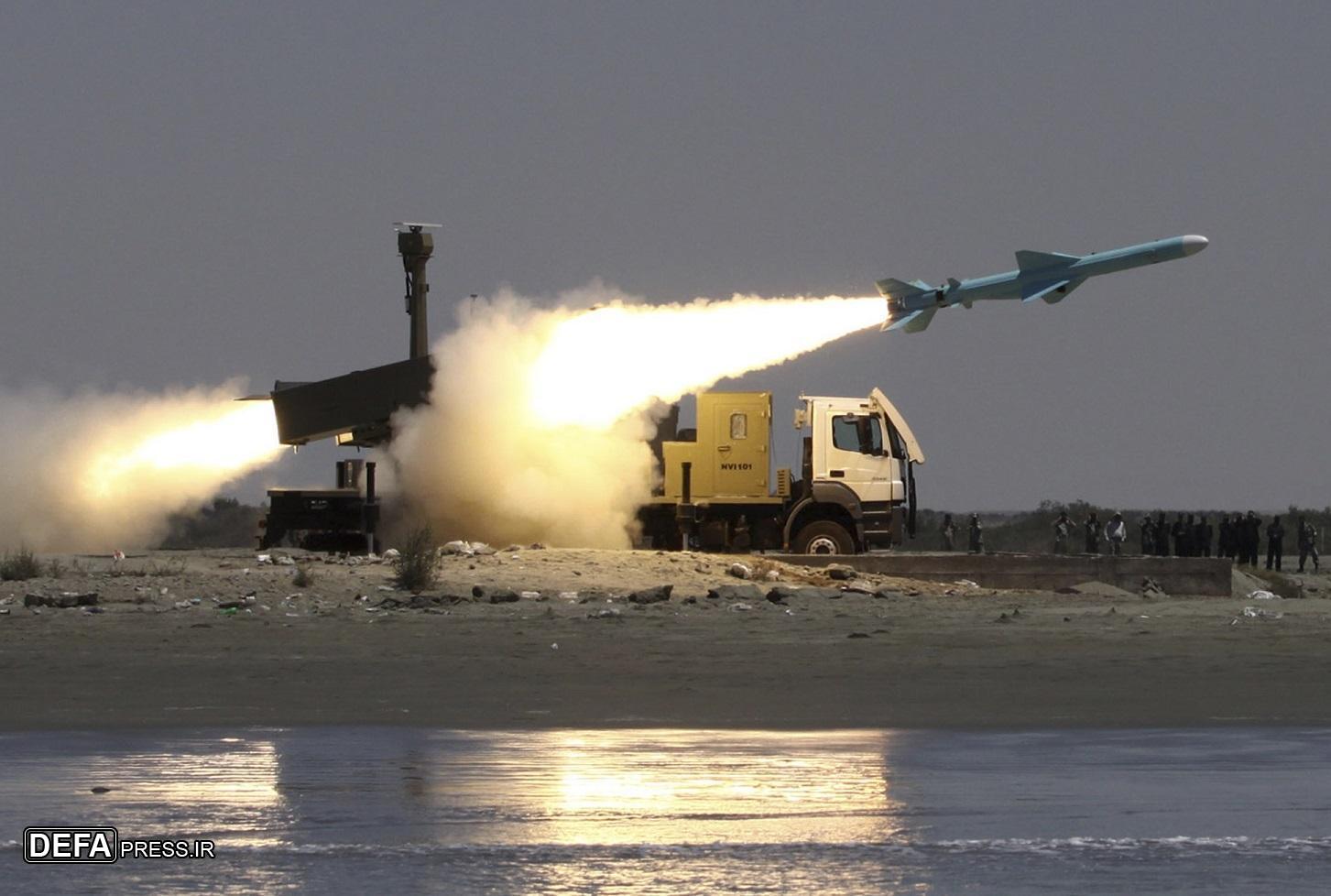
Unofficial reports indicate that Iran has intensified efforts to enhance its military capabilities, particularly in the naval domain, in anticipation of potential confrontation with the United States.
Kabul 24: These developments are primarily driven by the Islamic Revolutionary Guard Corps Navy (IRGC-N), which has long pursued improvements in both defensive and offensive positions across the Persian Gulf.
The main emphasis of these force movements and equipment deployments centers on Hormozgan Province and the strategically vital Strait of Hormuz—a critical global chokepoint through which roughly 20% of the world’s oil supply passes.
Iranian forces are repositioning assets and establishing stronger defensive and strike positions to expand operational reach in this key maritime area.
Key elements of this buildup include the widespread deployment of anti-ship missiles such as the Fath-360 (a short-range precision-guided ballistic missile) and related systems.
The Fath-360, with a range of around 120 km and speeds reaching Mach 4 in its terminal phase, features advanced terminal guidance seekers that significantly improve accuracy and maneuverability against moving maritime targets in the final approach.
In addition to short- and medium-range systems, the IRGC Navy has integrated the heavy Abu Mahdi anti-ship cruise missile into its arsenal.
This long-range strategic weapon, with a claimed range exceeding 1,000 km (and equipped with artificial intelligence for path adjustment and low-altitude sea-skimming flight), enables strikes on naval vessels far beyond Iran’s coastal waters.
This capability dramatically extends Iran’s operational depth at sea and poses a credible threat to distant enemy fleets.
These enhancements occur against a backdrop of escalating political and military tensions between Iran and the United States in the Persian Gulf region.
Recent large-scale naval drills by the IRGC—including tests of ballistic and cruise missiles near the Strait of Hormuz—along with deployments of fast-attack craft, drones, and mobile launchers, signal heightened readiness.
Analysts view these moves as part of Iran’s broader anti-access/area-denial (A2/AD) strategy, designed to impose severe costs on any potential aggressor by threatening key naval assets and disrupting maritime traffic through the strait.
Such actions, combined with reported preparations like placing coastal missiles on alert amid the approach of U.S. carrier strike groups, underscore Iran’s intent to project deterrence and protect its interests in this volatile theater.