
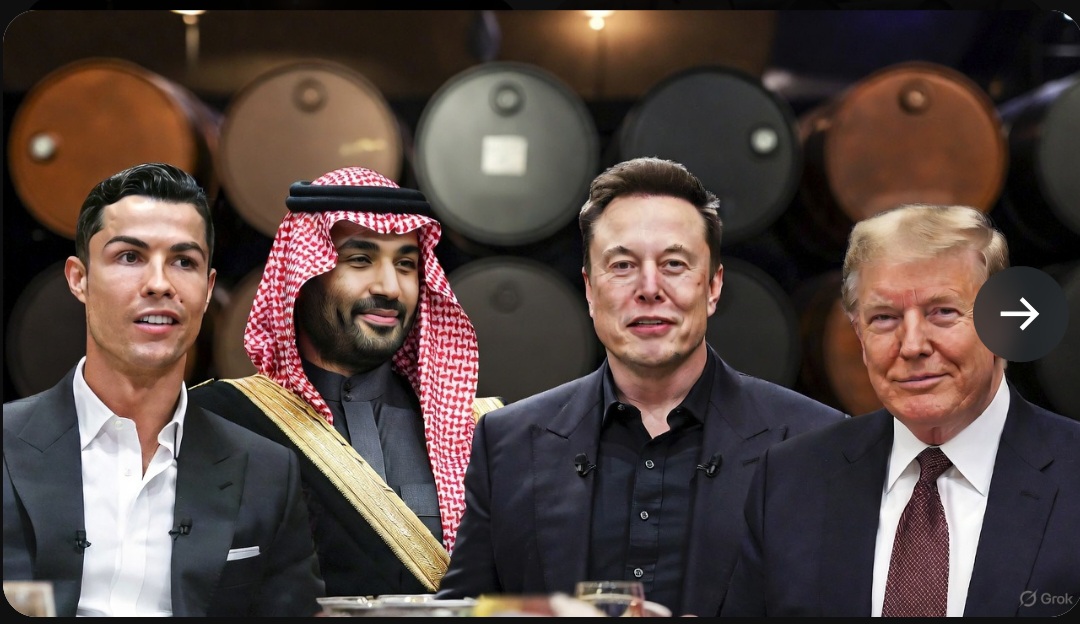
The image of Ronaldo, Trump, Musk, and Bin Salman side by side is a vivid illustration and symbol of politics in 2025.
The powerful men of our era: the world’s most famous footballer and a young reformist autocrat perched atop a sea of oil, feasting alongside the leader of the planet’s mightiest military.
Kabul 24: Add Elon Musk to this trio, who, on the occasion of Trump’s dinner in honor of Bin Salman, set foot in the White House again after a long absence.For the Saudi kingdom, Ronaldo is more than a valuable asset paraded in lavish spectacles.Ronaldo is one of the wellsprings of Riyadh’s soft power, purchased with oil money.
One could call Ronaldo the “Elon Musk of Bin Salman.” It’s the marriage of power and wealth, or the fusion of hard power and soft power, governance through football and technology. Musk and Ronaldo bear the task of bridging the present and the future.
Bin Salman’s Saudi Arabia dreams of crafting a global image for itself: a diverse and forward-looking economy, expansive international relations, and highlighting non-oil attractions—with football as the showcase for this once-traditional and conservative desert nation.
For Trump, who will soon co-host portions of the 2026 World Cup, entertaining Ronaldo is a tremendous boon.
Ronaldo is, in a sense, the godfather of the upcoming World Cup, and Trump is eager for a dazzling, theatrical role in this pivotal event.
The world of the future is no longer just one of political leaders and nation-states. Beyond conventional borders and recognized political units, new dynamics are emerging and playing their parts.The Gulf Arab countries have become integral to this global division of labor.
Salah al-Din Khadiv