

Moscow – Russian newspaper Izvestia cited military experts claiming that the United States has reached peak offensive readiness against Iran, with the deployment of the USS Gerald R. Ford aircraft carrier strike group completing a massive buildup in the region.
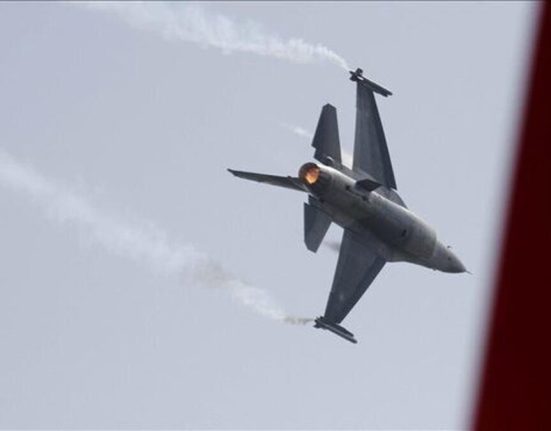
The carrier, the world’s largest and most advanced, is expected to arrive in the eastern Mediterranean by the end of this week (late February 2026), enabling its air wing—comprising advanced F-35C stealth fighters and other strike aircraft—to participate in any potential operation.
This naval escalation, described by analysts as the largest concentration of U.S. airpower in the Middle East since the 2003 invasion of Iraq, aims to finalize preparations for military action or exert maximum pressure on Tehran amid stalled nuclear negotiations.
The Ford joins the USS Abraham Lincoln carrier strike group, already operating in the Arabian Sea, creating a rare dual-carrier presence within striking range of Iran.According to estimates reported in Izvestia and corroborated by open-source monitoring, more than 600 Tomahawk cruise missiles are now deployed across U.S. warships and submarines in the Arabian Sea, Persian Gulf, and eastern Mediterranean.
These long-range precision-guided weapons, capable of striking targets up to 1,000 miles away, form a key component of the U.S. Navy’s standoff strike capability. Additional guided-missile destroyers equipped with air defense systems and Tomahawks have been repositioned to key chokepoints, including the Strait of Hormuz and Red Sea.
The buildup coincides with heightened tensions: Iran has conducted joint drills with Russia in the Indian Ocean and live-fire exercises in the Strait of Hormuz, while U.S. officials, including President Trump, have warned of severe consequences if Tehran refuses a nuclear deal.
The Pentagon’s moves include surging warplanes to forward bases in Europe and the Middle East, bolstering air superiority and rapid-response options.Experts view this posture as a combination of deterrence and coercive diplomacy, with the “armada” serving as leverage in ongoing talks. However, the scale—described as a “step change” in reinforcements—signals Washington’s preparation for escalation if diplomacy fails.
The Gerald R. Ford’s transit through the Strait of Gibraltar (confirmed via tracking data on February 20, 2026) underscores the urgency, potentially positioning U.S. forces for immediate action while talks remain fragile.
This development reflects broader geopolitical strains, including Iran’s nuclear advancements and regional proxy activities, amid calls from U.S. allies for a firm stance. While no imminent strike has been confirmed, the amassed firepower represents one of the most significant U.S. military concentrations near Iran in recent years.