
December 4, 2025 marks the sixth anniversary of the death of Japanese physician Dr. Tetsu Nakamura, who devoted his entire life to helping the people of Afghanistan.
Kabul 24: He was killed on December 4, 2019, along with four bodyguards and his driver, in an armed ambush in Jalalabad.On this very anniversary, his humanitarian legacy took a major step forward: leprosy treatment – the very cause that first brought Nakamura fame as a humanitarian in Afghanistan – has resumed after a 15-year hiatus.
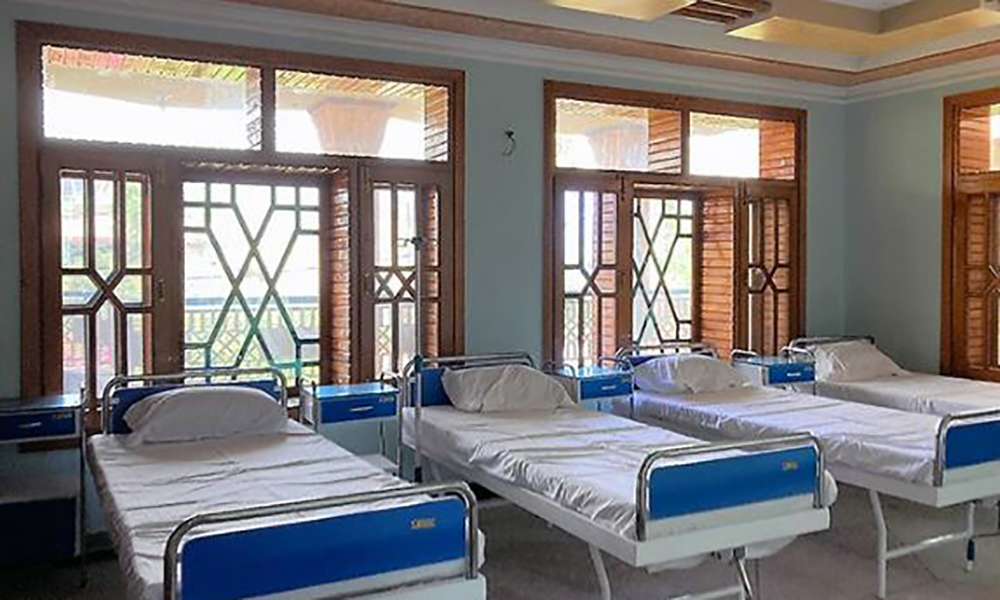
Japan’s Asahi Shimbun reported that the “Tetsu Nakamura Leprosy Memorial Center” officially opened on November 1, 2025, in Jalalabad. A renovated three-story private building now houses separate treatment wards with five beds each for men and women.
The center is operated by the Japan-based non-profit Peshawar-kai (headquartered in Fukuoka) and the local organization Peace Japan Medical Services (PMS), which Nakamura himself founded.
It is staffed by two doctors, three nurses, and 19 local Afghan employees.Before the opening, Ms. Chiyoko Fujita, 66, head of the PMS support office, told the staff: “The lives of patients are in your hands.”Nakamura began treating leprosy in 1984 at a hospital in Peshawar, Pakistan, where Afghan patients from remote mountainous areas traveled long distances for care. In the 1990s, to ease their journey, he established mobile and fixed leprosy clinics across eastern Afghanistan. Treatment was halted in 2010 due to deteriorating security.
Now, with relative improvement in security and repeated requests from local authorities in Nangarhar province, Nakamura’s colleagues have decided to honor his motto: “Continue all of Dr. Nakamura’s projects and carry every hope forward.”Mr. Masaru Murakami, 76, PMS general director, said: “For six years we worked under uncertainty, but today we can restart treatment.
With Nakamura’s will – ‘preserve life’ and ‘keep this light burning’ – we move forward.”A major ongoing challenge remains cultural and religious sensitivities, particularly the need for female nurses to examine female patients.
Ms. Fujita stressed that training and empowering local female nurses will be a core focus.
The Tetsu Nakamura Leprosy Memorial Center has the potential to save thousands of lives and keep the humanitarian legacy of one of Afghanistan’s greatest friends alive forever.