
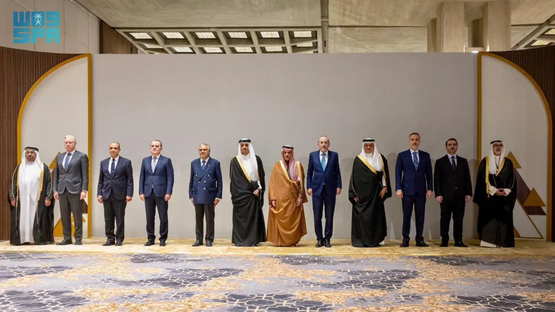
In a strong show of regional unity, foreign ministers from Turkey, Pakistan, Azerbaijan, and several Arab states—including the United Arab Emirates, Qatar, Bahrain, Egypt, Jordan, Kuwait, Lebanon, Saudi Arabia, and Syria—issued a joint statement unequivocally condemning Iran’s recent ballistic missile and drone assaults.
Kabul 24: The declaration followed an emergency consultative ministerial meeting held in Riyadh on Wednesday, March 18, 2026, amid escalating Iranian attacks on Gulf and neighboring countries.
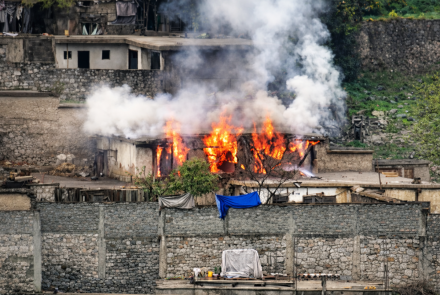
The ministers explicitly denounced the “deliberate Iranian aggressions” that targeted residential areas, civilian infrastructure, and non-military sites.
These included oil facilities, water desalination plants, airports, residential buildings, and diplomatic premises across multiple nations, including GCC members, Jordan, Azerbaijan, and Turkey.
The statement described such actions as “heinous” and emphasized that “these attacks cannot be justified under any pretext or in any circumstances.”Participants stressed the fundamental right of all states to self-defense, as enshrined in Article 51 of the United Nations Charter.
They called on Iran to “immediately” cease all hostile operations, respect international law, international humanitarian law, and the principles of good-neighborliness.
The joint communique urged Tehran to halt its campaign of missile and drone strikes, which have caused civilian casualties, material damage, and heightened regional instability since the broader conflict intensified in late February.
The meeting occurred against the backdrop of fresh Iranian strikes, including ballistic missiles launched toward Riyadh earlier on Wednesday.
Saudi defenses intercepted multiple incoming projectiles, though debris caused injuries and minor damage in residential zones and near energy infrastructure.
Similar attacks have hit energy sites in other Gulf states, raising alarms over threats to global energy security.Signatories reaffirmed their commitment to regional stability and de-escalation through diplomacy, while warning that continued aggression would only deepen isolation for Iran and invite proportionate responses.
The statement reflects growing coordination among diverse Arab and Islamic nations—spanning Sunni-majority states, Turkey, and others—in rejecting what they view as reckless Iranian escalation.
This unified position, issued on March 19, 2026, marks a significant diplomatic pushback against Iran’s actions in the ongoing regional crisis triggered by earlier strikes on Iranian facilities.
Diplomats indicated further consultations may follow to bolster collective security measures.