

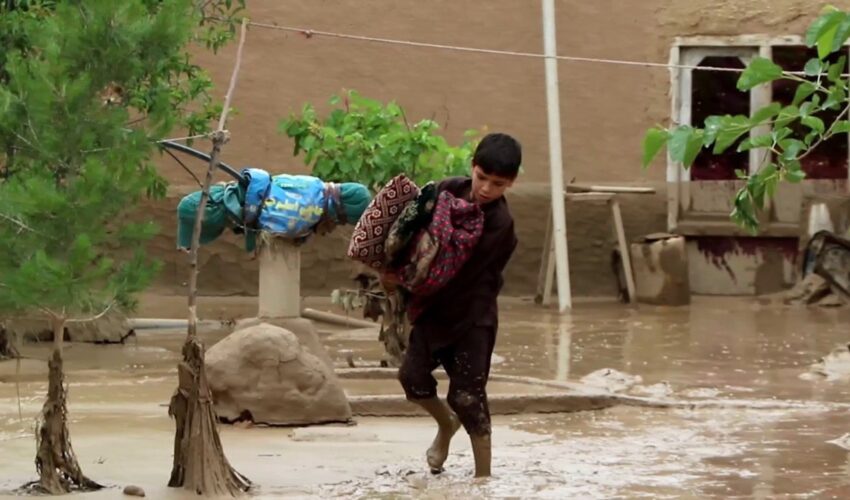
In the past 24 hours, heavy rainfall and sudden flash floods have claimed the lives of 11 people across 17 provinces in Afghanistan, while 6 others were injured.
Kabul 24: The disasters have also left 7 individuals missing and caused significant damage to homes and infrastructure.Mohammad Yousuf Hamad, spokesperson for the National Disaster Management Authority, stated: “As a result of the recent events, 11 people have been martyred, 6 injured, and 7 others remain missing.
Additionally, 3 houses have been completely destroyed, 156 houses partially damaged, 15 kilometers of road affected, and 290 families impacted.”The Meteorological Department under the Ministry of Transport and Civil Aviation has issued a serious warning.
Mohammad Nasim Moradi, head of the department, said that based on available models, intense rainfall accompanied by thunderstorms, flash floods, and strong winds is expected in most parts of the country.
He added that scattered but potentially heavy rains are also forecast for tomorrow and the coming days.One of the major consequences is the continued closure of the Kabul-Jalalabad highway for the fourth consecutive day.
Mohammad Ashraf Haqshenas, spokesperson for the Ministry of Public Works, announced that several other major roads have also been temporarily closed due to flooding and rockslides.
These include the route in Tangi Gharu on the Kabul-Jalalabad highway, the Roydad road in Samangan province, the Ferdows Belcheragh route in Faryab, and the Baghdis-Faryab and Baghdis-Herat highways.
In Baghlan province, which has suffered extensive damage, local officials, with the help of international organizations, have distributed food items, essential supplies, and hygiene kits to 350 affected families.
However, many victims are calling for sustained assistance and preventive measures to avoid similar tragedies in the future.Spring rains and floods in Afghanistan regularly cause heavy human and material losses, particularly in mountainous and riverine areas.
Experts emphasize the urgent need to strengthen early warning systems, clear riverbeds, and build protective structures to reduce casualties in coming years.
These latest incidents once again highlight the country’s vulnerability to extreme weather and the importance of better preparedness in the face of climate change.
Authorities have urged citizens to avoid unnecessary travel in high-risk areas and seek safe shelter during heavy rainfall.