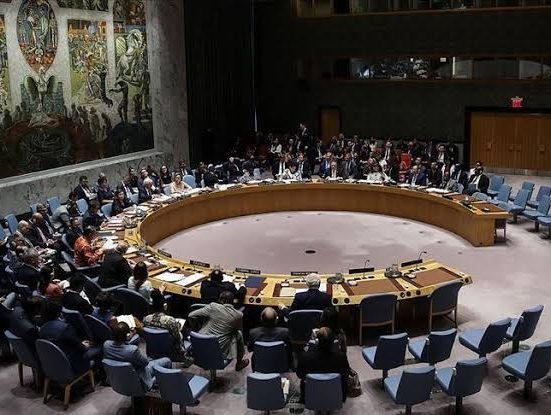

The comparison between the four-day conflict between India and Pakistan and the twelve-day war between Iran and Israel, which occurred in close proximity, is thought-provoking and instructive.
Kabul 24: In the first case, two nuclear powers confronted each other with the aim of achieving political gains and reinforcing and expanding their deterrence capabilities, while exercising a significant degree of restraint.
In contrast, Israel’s objective was to secure a strategic advantage by destroying or setting back Iran’s nuclear program and capabilities.
Despite these differences, the air-based nature of the conflicts was a common feature in both cases—an attribute that is a defining characteristic of current and future warfare.
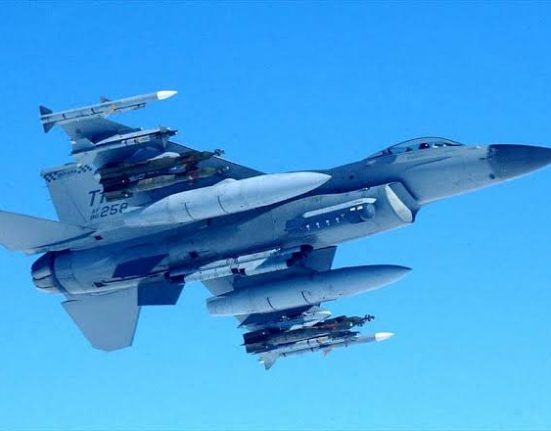
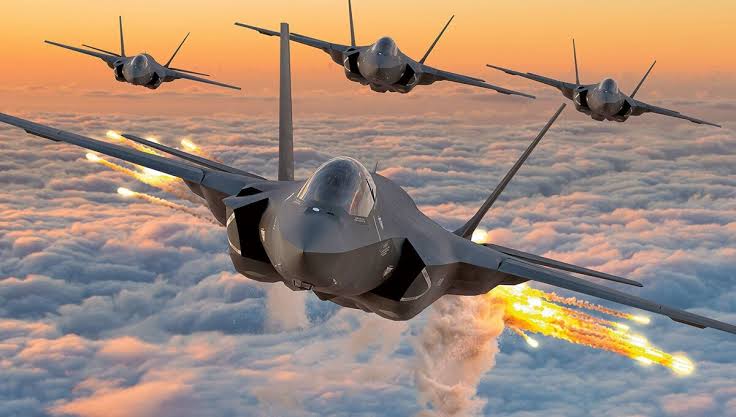
The focal point of the first conflict was Pakistan’s success in protecting its airspace and downing four to six advanced French Rafale fighters and several Russian aircraft. This success, achieved thanks to China’s stealth J-35 fighter, enabled Pakistan to achieve air parity against India’s larger and stronger military.
India has close defense cooperation with Israel, through which it gains access to advanced military technologies.
Pakistan’s success revealed two significant military and political truths.
From a military perspective, for decades, defending a country’s airspace and establishing deterrence has not solely relied on ground-based defenses. Rather, air forces play a more critical role in countering aircraft and drones, including fighters and unmanned aerial vehicles.
The political conclusion is even more significant. Why have Russia and China, Iran’s main allies on the global stage, so far refused to supply Sukhoi fighters or China’s “Flying Dragon” to Iran?
It is highly likely that Iran’s involvement in the Ukraine war, which imposed significant costs and contributed to the escalation of its nuclear issue, was motivated by hopes of receiving Sukhoi fighters to revive Iran’s aging air force.
Russia has refrained from fulfilling this expectation, and China has likely followed suit.
The answer to this puzzle lies in Iran’s foreign policy and its idealistic and ideological approaches.
This policy, rooted in Cold War perspectives and the political ideologies popular in the 1960s and 70s, holds a theological view of independence, non-alignment, and commitment to the Palestinian cause.
Today’s global economy and political relations are far more interconnected and intertwined than in the past. Both China and Russia maintain complex and multifaceted relations with Israel.
For China, which faces strained relations with the U.S. and Europe, maintaining good ties with Tel Aviv means preserving a bridge to cutting-edge Western technology and pursuing its economy-driven global orientation.
The relationship between Russia and Israel is even more complex and closer. Describing Israel as a “Russian-speaking country” during its conflict with Iran unveiled the deep ties between the two nations.
Russia, facing isolation and sanctions from the Western world, increasingly relies on keeping its “Israel window” open and benefits from political trade-offs with Israel in various domains.
Given this context, Iran’s isolated foreign policy, held hostage by romantic revisionism in the international order, has limited capacity to leverage the opportunities of today’s diverse and interconnected global landscape.
China, Russia, India, Turkey, Brazil, and others are emerging powers that, in some cases, challenge the Western order but are incapable of altering a 500-year-old geopolitical reality.
Idealistic views devoid of geopolitical logic often collide with the hard rock of reality. In today’s world, it is difficult to find anything pure, pristine, or sanctified.
Following the recent India-Pakistan conflict, New Delhi immediately requested that Russia refrain from supplying J-fighter engines to Pakistan. Unlike some Chinese versions, the Pakistani variant of this aircraft is equipped with Russian engines.
The origins of this Chinese multi-role fighter are even more “illegitimate”! It is said to be a copy of an Israeli fighter called the Lavi, with technology purchased from Israel in the 1990s.
In the 1980s, Israel, with a smaller economy and a weaker military than today, sought a cost-effective aircraft to complement its advanced fleet.
To this end, it secured financial support from the U.S. The project later saw technological breakthroughs, but the U.S., concerned about the Lavi competing with the F-16 and even the F-18, withdrew its funding. Unable to sustain the project financially, Israel halted it and sold the initial design to China.
Given these circumstances, how can one expect effective and practical assistance from China or even Pakistan, which politically sided with Iran in the recent conflict?
Salahuddin Khadiw