
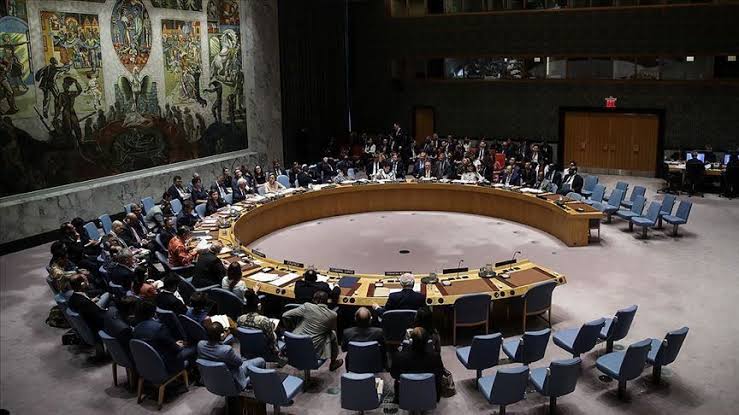
The United Nations Security Council has highlighted deep divisions among its permanent members regarding Afghanistan in its latest report.
Kabul 24: While the permanent members share common views on key issues such as the need for an inclusive government, adherence to international commitments, and ridding Afghanistan of terrorism, they remain sharply divided on the methods and strategies to achieve these goals.
According to the report, Russia and China advocate for greater engagement and dialogue with the Taliban-led government without increasing political pressure.
They call for the lifting of sanctions on Afghan assets and Taliban officials to facilitate economic recovery and regional stability.
In contrast, the United States continues to prioritize the protection of American citizens, countering terrorism threats, and securing the release of detained US nationals.
Washington maintains a more cautious and condition-based approach toward the Islamic Emirate.The report notes that China and Russia argue the international community should provide economic and development assistance to Afghanistan without conditioning it on issues such as women’s and girls’ rights.
Both countries support unconditional engagement and dialogue with Afghan authorities and oppose further political pressure, which they believe could worsen the humanitarian situation.
The Security Council report also addresses several other critical challenges, including security concerns, human rights, border tensions between Afghanistan and Pakistan, the severe humanitarian crisis, and the return of refugees and migrants to the country.
One of the key agenda items for the upcoming Security Council meeting is the extension of the United Nations Assistance Mission in Afghanistan (UNAMA).
The mission was previously extended for only three months at the request of the United States, and discussions are now focused on its future mandate and duration.
The Islamic Emirate of Afghanistan has not yet issued an official reaction to the latest report. However, it has consistently welcomed the positions of Russia and China, particularly their support for constructive engagement, sanctions relief, and increased economic assistance.
This divergence reflects broader geopolitical competition over Afghanistan’s future. While the United States emphasizes security, counter-terrorism, and human rights, China and Russia prioritize regional stability, economic opportunities, and pragmatic engagement with the de facto authorities.
The ongoing disagreements among permanent members could significantly impact the scale and nature of international aid, the humanitarian situation on the ground, and long-term stability in Afghanistan and the wider region.