

Plato’s aim was to help people attain a “life of continuous fulfillment”—to navigate life successfully and experience a good, meaningful existence.
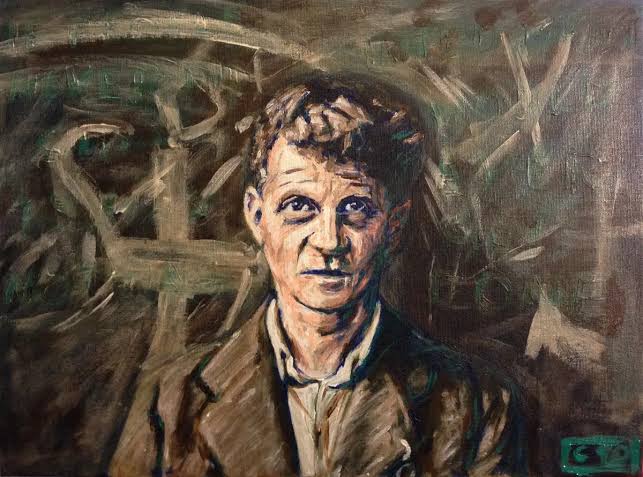
There is no doubt that Plato’s philosophical model was, and remains, magnificent, inspiring, and admirable. In this respect, the famous contemporary philosopher Ludwig Wittgenstein resembles him; he too invites us to live well through his own concept of a “form of life.” However, in comparing these two great thinkers, what proves most useful for our lives today and resonates with our ongoing concerns is a significant distinction between their perspectives:
Kabul 24:Plato seeks to achieve a “change in the world” through philosophy. With grand ambition, he aims to construct a utopia that aligns the external world with the concept of “living well.”
Wittgenstein, on the other hand, invites us to transform our inner selves to the point where we can harmonize and empathize with the specific external “form of life” given to us, understanding its essential governing conditions.
In other words, according to Wittgenstein, to comprehend the world and manage the deterministic form of life we are handed, we first need to know and direct ourselves. That is, coming to terms with life is achieved through self-understanding, as well as recreating and re-narrating our lived experience like a work of art. Since we may not have the power to alter external reality, we retain the capacity to change and refine ourselves. Therefore, the task of philosophy should be to teach the skills and wisdom needed to cope with life and live well within the given external conditions.
For Plato, however, we must reform and transform the given external world so that the human beings nurtured within its environment can arrive at self-understanding and have the possibility of forging a good life.
So, in the end, is it external change or internal change?
Finding a precise answer to this question may be one of the most pressing concerns of our contemporary existence. Faced with the hardships of the COVID-19 pandemic, we realized that despite our development, technology, and mastery over the external world, we had previously merely been living in the dream and illusion of controlling it.
Therefore, before answering, let us pause and reflect on this for a few days. Deep down, all of us thirst for “knowing,” and despite this key difference in their outlooks and thought, both Plato and Wittgenstein believe that philosophy must teach us the path of “how to know” and “how to live well.”
And as we reflect, let us not forget that the question of “changing the outside or oneself” will subconsciously lead us toward understanding our own state of being.
This state of being is that very “form of life” given to each of us, and without comprehending it, we cannot understand existence in a pure and isolated sense.
Thus, to arrive at a more precise and meaningful answer, we must see how and by what path we ought to understand our given state of existence—so that from this very trajectory, we can determine whether internal change leads to an understanding of the external world, or vice versa.
Maryam Khalili
—