

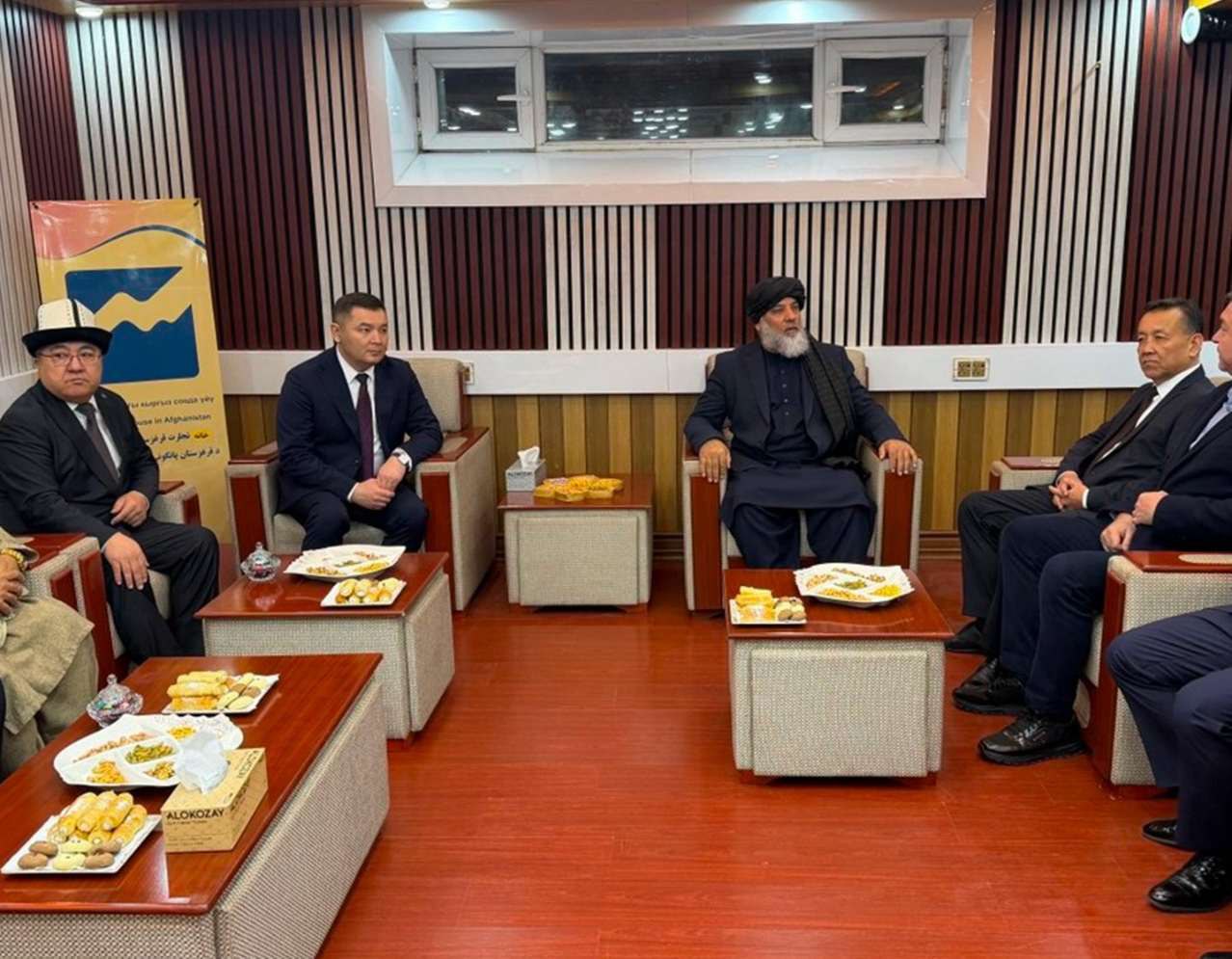
On December 16, 2025, the Kyrgyzstan Trade House was officially inaugurated in Kabul, an event hailed as a significant milestone in expanding trade and economic relations between Kyrgyzstan and Afghanistan.
Kabul 24 : The ceremony was attended by Bakyt Sydykov, Kyrgyzstan’s Minister of Economy and Commerce, and Nooruddin Azizi, Afghanistan’s Acting Minister of Industry and Commerce, along with representatives from the private sectors of both nations.
The Trade House, established based on prior agreements between Kabul and Bishkek, serves as a permanent platform for promoting Kyrgyz goods in the Afghan market.
Officials from both sides emphasized that this initiative will facilitate direct connections between traders, increase bilateral trade volumes, ease goods transit, and attract joint investments.
It also institutionalizes cooperation, fostering long-term economic partnerships between the two capitals.During the Kyrgyz delegation’s visit to Kabul, an Afghanistan-Kyrgyzstan Trade Connectivity Conference was held, resulting in the signing of trade memorandums of understanding worth between $156 million and $165 million.
These agreements cover diverse sectors, including gold, pharmaceuticals, telecommunications, mining, energy, logistics, transportation, banking, agriculture, and livestock farming.
The ministers highlighted the strategic complementarity of their countries: Afghanistan as a gateway to South and West Asia, and Kyrgyzstan as an entry point to Central Asia and the Eurasian Economic Union.
This development occurs amid Afghanistan’s efforts to diversify trade partners, particularly following prolonged border closures with Pakistan that have stranded billions in goods.
The opening of the Trade House not only aims to boost mutual exports—Kyrgyz products to Afghanistan and Afghan resources to broader markets—but also signals growing engagement from Central Asian nations with Kabul.
Overall, this event reflects an increasing trend of practical economic interaction in the region. With the implementation of the signed cooperation roadmap, bilateral trade is expected to reach new heights, bringing mutual economic benefits and serving as a model for similar collaborations with other neighbors.