
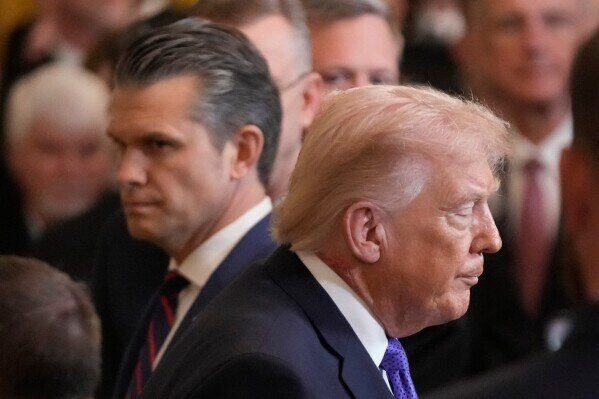
Washington – U.S. President Donald Trump announced late Tuesday night, just hours before his self-imposed deadline expired, that he has accepted Pakistani Prime Minister Shehbaz Sharif’s proposal for a two-week ceasefire with Iran.
Kabul 24: The agreement is strictly conditioned on the Islamic Republic immediately, fully, and securely reopening the Strait of Hormuz to international maritime traffic.
In a post on Truth Social, Trump stated: “Following conversations with Prime Minister Shehbaz Sharif and Field Marshal Asim Munir of Pakistan, and based on their request to halt the devastating force scheduled for tonight, I have agreed to suspend bombing and attacks on Iran for a period of two weeks, provided that the Islamic Republic of Iran agrees to the complete, immediate, and secure reopening of the Strait of Hormuz.”The decision came after Trump had issued a stern ultimatum earlier in the day, warning that failure to reach an agreement by 8:00 p.m. Eastern Time (approximately 2:30 a.m. Tehran time on Wednesday) would trigger massive U.S. strikes on Iranian infrastructure.
He had even used dramatic language, referring to the potential consequences as “the death of an entire civilization.”Iran’s Foreign Minister Abbas Araghchi responded by stating that, if attacks cease, Iranian armed forces would ensure safe passage through the Strait of Hormuz for two weeks “in coordination with Iranian military authorities and taking technical limitations into account.” Tehran described the deal as acceptance of the broader framework of its own proposals and hailed it as a diplomatic achievement.
Pakistani Prime Minister Sharif played a pivotal mediating role. Following the announcement, he invited both Iranian and American sides to hold talks in Islamabad on Friday, April 10, 2026, to continue negotiations toward a final agreement. Sharif stressed that the ceasefire must take immediate effect across all fronts, including Lebanon.Both sides claimed victory.
Trump called the outcome a “complete victory,” saying he had forced Iran to reopen the Strait. Iranian officials, meanwhile, argued that the temporary truce had neutralized American military pressure and created an opportunity to advance their 10-point proposal.
The Strait of Hormuz is one of the world’s most critical waterways, carrying roughly 20 percent of global crude oil. Its partial closure in recent days had caused sharp spikes in oil prices and widespread economic concerns.
Following the ceasefire announcement, global oil prices dropped rapidly.Israel also expressed support for Trump’s decision to suspend strikes, though it clarified that the truce does not apply to its operations in Lebanon. Upcoming talks in Islamabad are expected to address broader issues, including Iran’s nuclear program and regional security.
This two-week ceasefire has temporarily eased the intense tensions of recent days and opened a window for diplomacy. However, many analysts describe the agreement as fragile, warning that its success depends on strict compliance by both parties.