
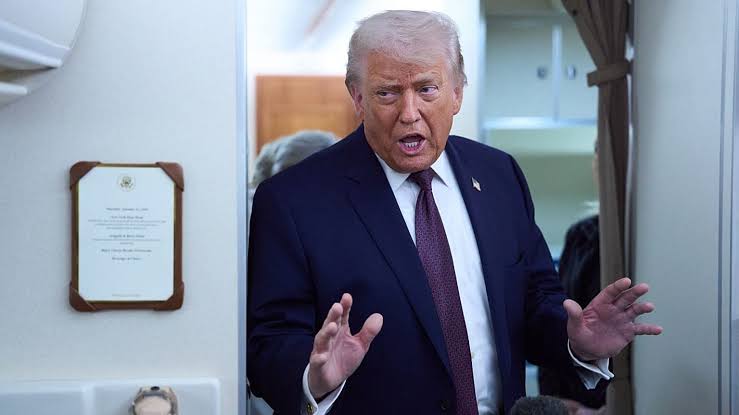
U.S. President Donald Trump confirmed on Tuesday that the United States is actively engaged in negotiations with the Islamic Republic of Iran, stating that Tehran appears eager to reach some form of agreement.
Kabul 24: Speaking to reporters at the White House, Trump said: “[Iran] is negotiating and wants to do something, and we’ll see if we can make it work.”The remarks come at a critical juncture in U.S.-Iran relations, marked by heightened military tensions in the Middle East.
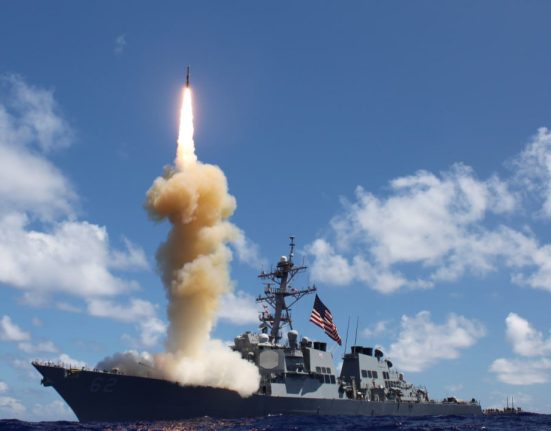
Following earlier U.S. military strikes on Iranian nuclear sites last summer and recent deployments of significant American naval assets—including aircraft carrier strike groups—to the region, both sides have signaled a potential shift toward diplomacy to avert further escalation.
Trump emphasized that talks are already underway, describing the situation as fluid but hopeful. He noted that Iran had opportunities in the past but failed to capitalize on them, referencing prior operations such as the “Midnight Hammer” strikes. “I don’t think they want that happening again,” he added, suggesting that Tehran is motivated to negotiate to avoid renewed military action.
The president highlighted that multiple channels and locations are involved in the discussions, with more than one session reportedly in progress.Iranian officials, including President Masoud Pezeshkian and Foreign Minister Abbas Araghchi, have responded cautiously but positively to the prospect of talks.
Pezeshkian instructed his foreign ministry to pursue “fair and equitable negotiations” free from threats or unreasonable demands, following outreach from regional mediators. Reports indicate that preliminary or preparatory discussions may lead to a key meeting in Istanbul or Oman later this week, potentially involving U.S. special envoy Steve Witkoff and other regional actors.
The negotiations are expected to focus primarily on Iran’s nuclear program, with the U.S. demanding strict limits or dismantlement to prevent weaponization, alongside concerns over ballistic missiles and regional proxy activities.
Iran has conditioned its participation on mutual respect and an end to coercive pressures, while insisting that its missile capabilities and support networks remain non-negotiable core elements of national security.
Trump’s comments blend optimism with warnings: if a deal can be reached, it would be “great,” but failure could lead to “bad things” or severe consequences. This carrot-and-stick approach reflects the administration’s strategy of combining military buildup with diplomatic openings to pressure Tehran into concessions.
As preparations for potential face-to-face talks continue, the coming days will be pivotal in determining whether diplomacy can de-escalate the standoff or if tensions will spiral toward renewed conflict.
Regional allies and international observers are closely monitoring developments, hoping for a negotiated resolution that stabilizes the volatile Middle East.