
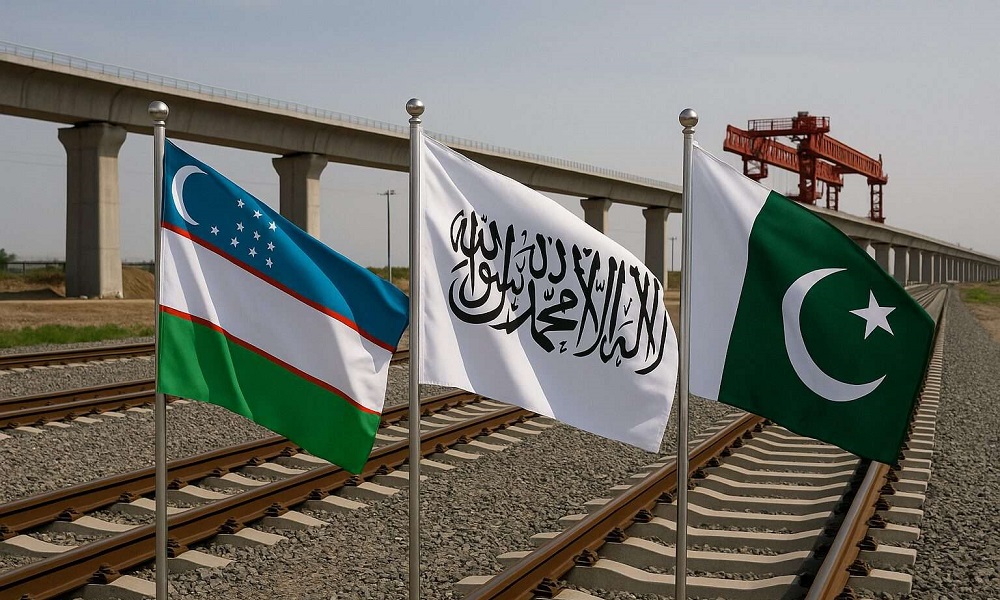
A senior Uzbek official has announced that Uzbekistan, Afghanistan, and Pakistan have reached a conceptual agreement to establish a joint transit corridor linking Central Asia to the Arabian Sea ports.
Kabul 24: This strategic corridor is expected to provide landlocked Central Asian countries with more reliable and efficient access to international waters.
According to a report by Eurasianet, Jasurbek Choriyev, Deputy Minister of Transport of Uzbekistan, stated that technical studies for the project have already begun and route survey work is currently underway.
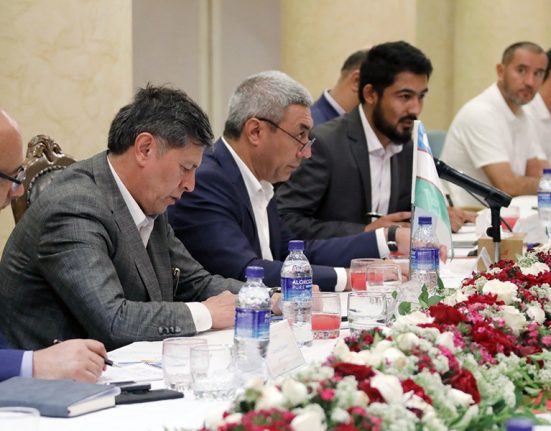
He made these remarks during the annual meeting of the Asian Development Bank held in Samarkand.Choriyev explained: “The next stage is to determine how and at what speed we can attract investment, and which partners will be interested in this project.”He added that the proposed route will pass through Afghan territory and connect via Pakistan to the ports of Karachi and Gwadar.
This corridor is viewed as a vital project that will significantly reduce transportation costs and time for Uzbek and other Central Asian goods heading to global markets.
The Uzbek official noted that the alternative route leading to Bandar Abbas port in Iran currently appears impractical due to the “unpredictable” situation in the region. As a result, the focus has shifted to the Afghanistan-Pakistan route as the more viable option at present.
Choriyev emphasized the importance of joint cooperation among Central Asian countries to develop new transit corridors. He stressed that these projects must be implemented without delay through active regional collaboration and international partnerships.
This conceptual agreement comes as landlocked Central Asian nations seek to diversify their transit routes and reduce dependency on existing pathways. For Afghanistan, the project offers a significant opportunity to serve as a regional bridge, generate transit revenue, and create jobs in logistics and infrastructure sectors.
Pakistan stands to benefit from increased port activity and strengthened regional trade ties.If realized, the corridor is expected to boost regional trade volumes, lower logistics costs, and enhance economic connectivity between Central Asia and South Asia.
The Asian Development Bank and other international financial institutions are being considered as potential partners for funding and technical support.
The initiative represents a promising step toward trilateral economic cooperation among Uzbekistan, Afghanistan, and Pakistan. It could play a key role in promoting long-term stability, economic growth, and integration across the broader region.