
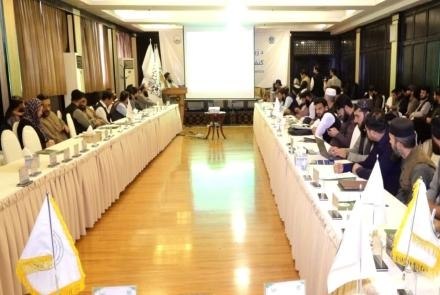
The Director General of Afghanistan’s National Environmental Protection Agency stated at the National Conference on Waste Management in Kabul that major cities across the country are facing serious challenges in waste management due to rapid population growth.
Kabul 24: Matiullah Khales also emphasized the need to prevent the use of plastic nationwide.“Plastic waste can remain in the environment for hundreds of years,” Khales said. “Unfortunately, these wastes pollute both soil and the broader environment. Solving this challenge requires joint cooperation among citizens, the private sector, government institutions, and other stakeholders.
We must work together to address this issue.”The organizers of the conference stated that its main objective was to create coordination and collaboration among institutions, the private sector, and government bodies for more effective waste management across the country.
Participants highlighted several critical challenges, including the severe shortage of waste bins, the lack of source-segregation and recycling systems, and the absence of standard sanitary landfills for final disposal.
Abdul Hadi Achakzai, Head of the organizing institute, expressed deep concern over the environmental situation and said: “We live in a city that is highly vulnerable to climate change on one hand, and unfortunately has not received adequate attention to its environmental conditions on the other.
This situation demands serious and immediate attention.”The sudden and rapid urbanization in Afghanistan has led to improper management and collection of waste in many large cities.
This issue requires extensive public awareness campaigns and cultural change.Experts noted that in many urban areas, waste is not collected on time, leading to accumulation in streets, riversides, and vacant lands.
This not only creates an unpleasant scene but also poses serious health and environmental risks, including air, water, and soil pollution.The conference brought together government officials, private sector representatives, environmental activists, and experts.
Participants stressed that sustainable waste management needs a two-pronged approach: first, the development of proper infrastructure such as sufficient waste collection bins, modern collection fleets, recycling centers, and engineered landfills; and second, widespread public education to reduce plastic consumption and encourage responsible waste disposal.
This national conference is expected to serve as a starting point for drafting a comprehensive national strategy on waste management in Afghanistan.