

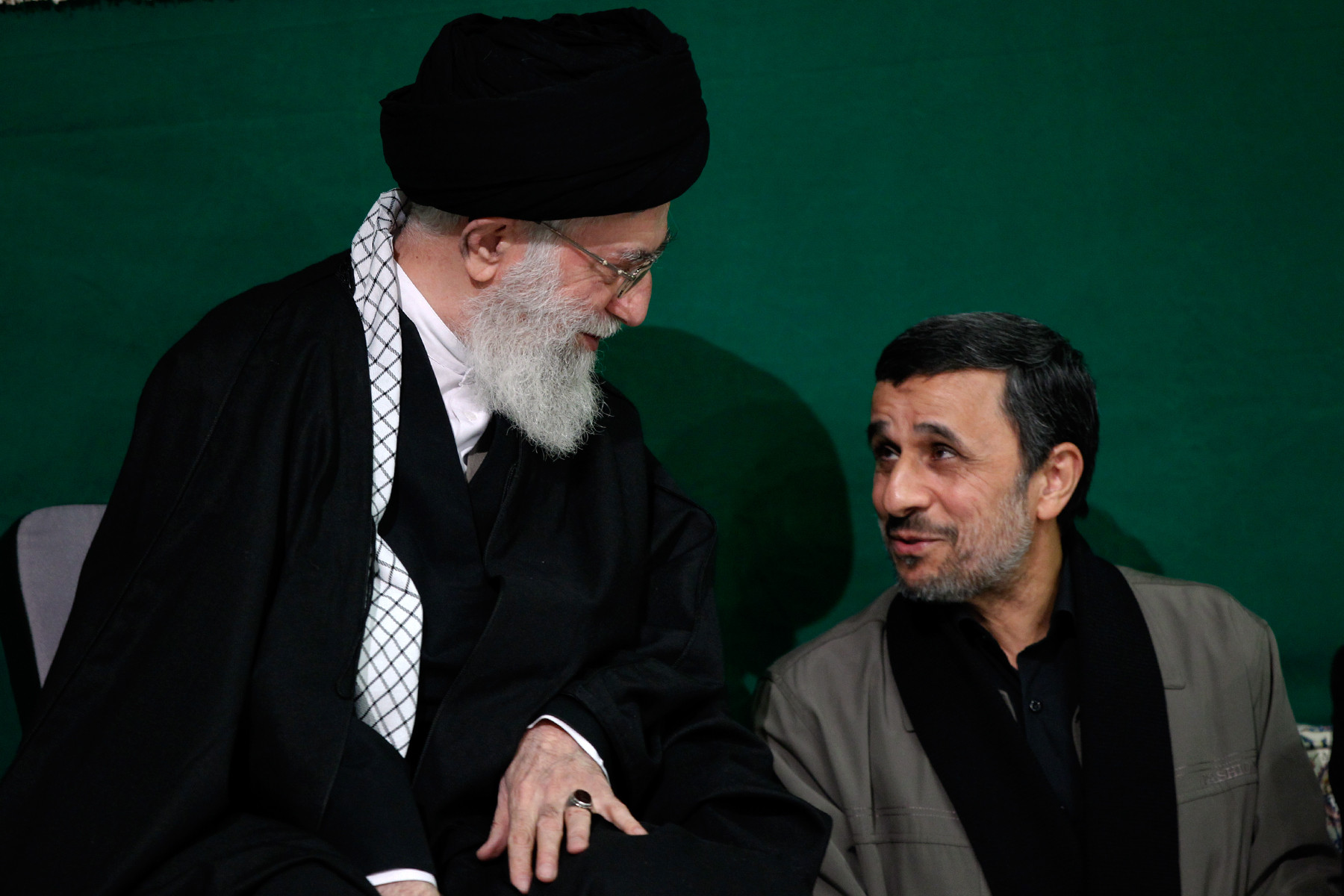
According to a report by The New York Times, citing informed American officials, Israel’s strike on the home of former Iranian President Mahmoud Ahmadinejad was specifically designed to free him from house arrest.
Kabul 24: The operation was part of a broader US-Israeli plan for regime change in Iran aimed at installing Ahmadinejad as a new leader.Days after the killing of Supreme Leader Ali Khamenei and other senior Islamic Republic officials in the first wave of the US-Israel war against Iran, US President Donald Trump stated that it would be better for “someone from inside Iran” to take control of the country.
The New York Times reveals that the United States and Israel had surprisingly chosen Mahmoud Ahmadinejad — a hardline former president known for his strong anti-Israel and anti-American views — as a key figure in their post-regime strategy.
American officials familiar with the plan told the newspaper that Israel had designed the operation and that consultations had taken place directly with Ahmadinejad himself.
However, the ambitious scheme quickly went off track.According to US officials and one of Ahmadinejad’s close associates, he was wounded during an Israeli airstrike on his residence in Tehran on the first day of the war.
The strike had been deliberately planned to liberate him from house arrest. Sources say Ahmadinejad survived the attack, but the incident — which nearly cost him his life — left him deeply disillusioned with the regime change plot.
The report indicates that following the assassination of top Iranian leaders, Washington and Tel Aviv sought a transitional figure from within the existing system. Ahmadinejad, despite his controversial history, was viewed as a potential candidate who could help stabilize the country under a new arrangement.
Nevertheless, the strike on his home not only failed to achieve its objective but also caused him serious injury. After recovering from the brink of death, Ahmadinejad reportedly withdrew all support from the plan and showed no further interest in cooperating with US or Israeli efforts.
This revelation sheds light on the unexpected and high-risk strategies considered by the US and Israel in the early stages of the conflict. The idea of empowering Ahmadinejad — once a vocal critic of both countries — highlights the complex calculations made amid the power vacuum created by the rapid elimination of Iran’s top leadership.
The New York Times report underscores how a bold and secretive plan unraveled almost immediately, altering the trajectory of efforts to reshape Iran’s political future.