
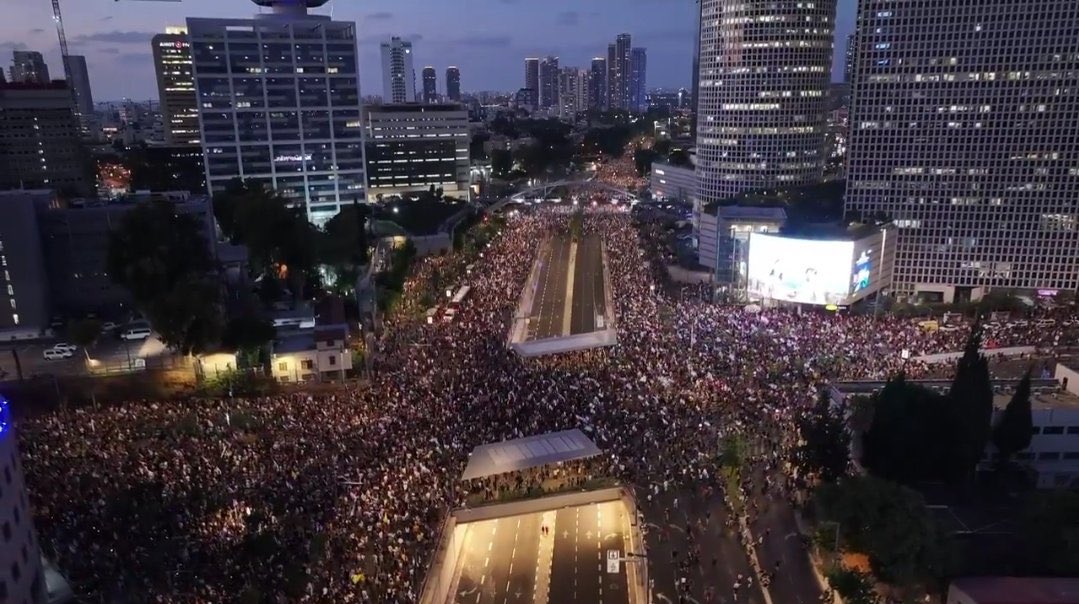
On Saturday evening, thousands of Israeli citizens gathered in the streets of Tel Aviv to voice their opposition to Prime Minister Benjamin Netanyahu’s new plan to escalate the nearly two-year-long war in Gaza.
Kabul 24: The demonstration, marked by a significant turnout from diverse segments of society, emerged as one of the largest protest rallies in recent months.
Protesters, holding placards and chanting slogans, demanded an immediate end to the conflict and prioritized negotiations for the release of the remaining hostages.
The Gaza war, ongoing for nearly two years, has exacted a heavy toll—human, economic, and political—on both sides.
Protesters argued that Netanyahu’s plan to intensify military operations would not only fail to resolve the crisis but could worsen the situation and endanger the lives of hostages.
They contended that continuing the war without a clear strategy for peace would only lead to more civilian casualties and further destruction of infrastructure.
Families of the hostages played a prominent role in the rally, delivering emotional speeches urging the government to expedite negotiations with international mediators.
One speaker, a mother whose child is in captivity, tearfully declared, “We don’t want our loved ones to be pawns in political games. Peace and their safe return are the only solutions.” Her words were met with resounding applause from the crowd.
Conversely, supporters of Netanyahu argue that expanding military operations is necessary to weaken armed groups in Gaza.
They believe that without military pressure, the prospects for negotiating the release of hostages diminish. However, this view found little support among the protesters.
The rally took place amid heightened regional tensions, with the international community warning of the consequences of prolonging the conflict.
Protesters emphasized the need for a shift in government policy, vowing to continue their demonstrations until their demands—ending the war and securing the hostages’ release—are met. The event underscored a deep divide within Israeli society over the handling of the ongoing crisis.