
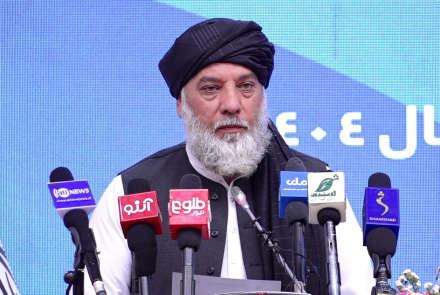
The Ministry of Industry and Commerce of Afghanistan organized the National Export Day and an awards ceremony to honor the country’s top exporters for the year 1404 (2025-2026).
Kabul 24: The event was held in Kabul with the participation of senior officials from the Islamic Emirate, ambassadors, and foreign diplomats.During the program, Abu Bakr Afghan Trading Company secured first place in multiple categories and was recognized among the leading exporters of the country.
Nooruddin Azizi, Minister of Industry and Commerce, announced that Afghanistan currently exports its products to more than 100 countries worldwide through six border points, with approximately 250 different export items.Highlighting industrial progress, Azizi stated: “When we first assumed responsibility for the Ministry, there were fewer than 2,000 active factories.
Today, that number has surpassed 6,500 factories.”Nawr-ul-Haq Anwar, Head of the Administrative Office, emphasized the need to provide necessary facilities for traders, address their challenges, and move toward economic self-sufficiency.
Minister Azizi criticized Pakistan’s economic policies, stressing that politics should be kept separate from trade.
He noted that border closures by Pakistan have caused significant damage, including spoilage of fruits and vegetables and the return of containers.
He added that some Afghan containers are still unjustly held at Karachi Port and other locations.Attaullah Omari, Minister of Agriculture, Irrigation and Livestock, highlighted the exceptional quality of Afghan products, saying: “Fresh and dried fruits such as pomegranates, grapes, apricots, raisins, pistachios, almonds, pine nuts, and saffron have earned the trust of consumers in various global markets due to their superior quality.”Sayed Karim Hashimi, President of the Afghanistan Chamber of Commerce and Investment, welcomed the organization of such events and invited both domestic and foreign investors to invest in Afghanistan.
He underlined the vital role of traders, industrialists, and exporters in creating jobs, boosting production, reducing poverty, and strengthening the national economy.
This ceremony takes place at a time when Afghanistan’s exports still constitute a relatively small share of the country’s foreign trade, with imports making up the majority of transactions.
Nevertheless, officials point to notable growth in the number of factories, diversification of export products, and expansion of target markets.