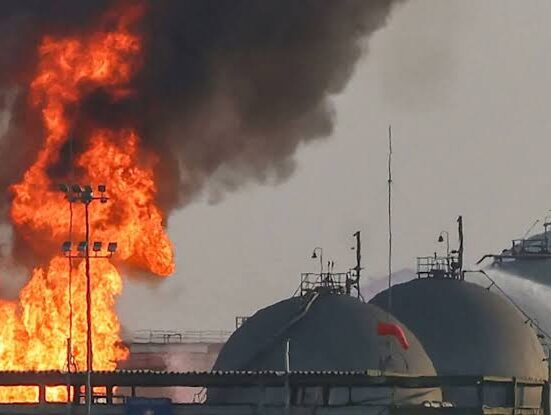


A massive fire that broke out at a furniture manufacturing plant in Saudi Arabia’s capital, Riyadh, has led to a heartbreaking human tragedy, taking the lives of 16 Bangladeshi migrant workers.
Kabul 24: According to official diplomatic reports from Bangladesh, the catastrophic blaze occurred on Sunday, August 9, within the “Musa Al-Sana’iya” industrial zone on the outskirts of Riyadh, resulting in irreplaceable loss of life.
Following the tragic event, the Ministry of Foreign Affairs of Bangladesh immediately intervened, instructing diplomats at its embassy in Riyadh to track the situation closely.
Working in direct coordination with Saudi law enforcement and judicial authorities, Bangladeshi diplomatic representatives are currently handling legal procedures, victim identification, and the necessary documentation to expedite the repatriation of the deceased workers’ remains to their homeland.
Furthermore, Areful Haque Chowdhury, Minister of Expatriates’ Welfare and Overseas Employment, issued special directives to relevant agencies to ensure the swift return of the bodies without delay, while guaranteeing that state assistance and official compensation reach the bereaved families.
Bangladesh remains one of the primary exporters of low-cost manpower to the Gulf region, with Saudi Arabia standing as the largest single destination, hosting approximately 3.5 million Bangladeshi nationals.
These workers are heavily concentrated in demanding sectors such as construction, services, and manufacturing, forming a critical economic lifeline for Bangladesh.
Remittances sent home by these expatriates are vital to sustaining the macroeconomic stability of the South Asian nation; official data indicates that Bangladeshi workers in Saudi Arabia transferred over $2.7 billion back to their country in 2025 alone.
Despite their immense economic contributions, this tragic incident once again highlights the harsh working conditions, low wages, and severe safety hazards associated with non-standard work environments—issues that continue to draw widespread criticism from international human rights organizations monitoring labor systems across the region.