
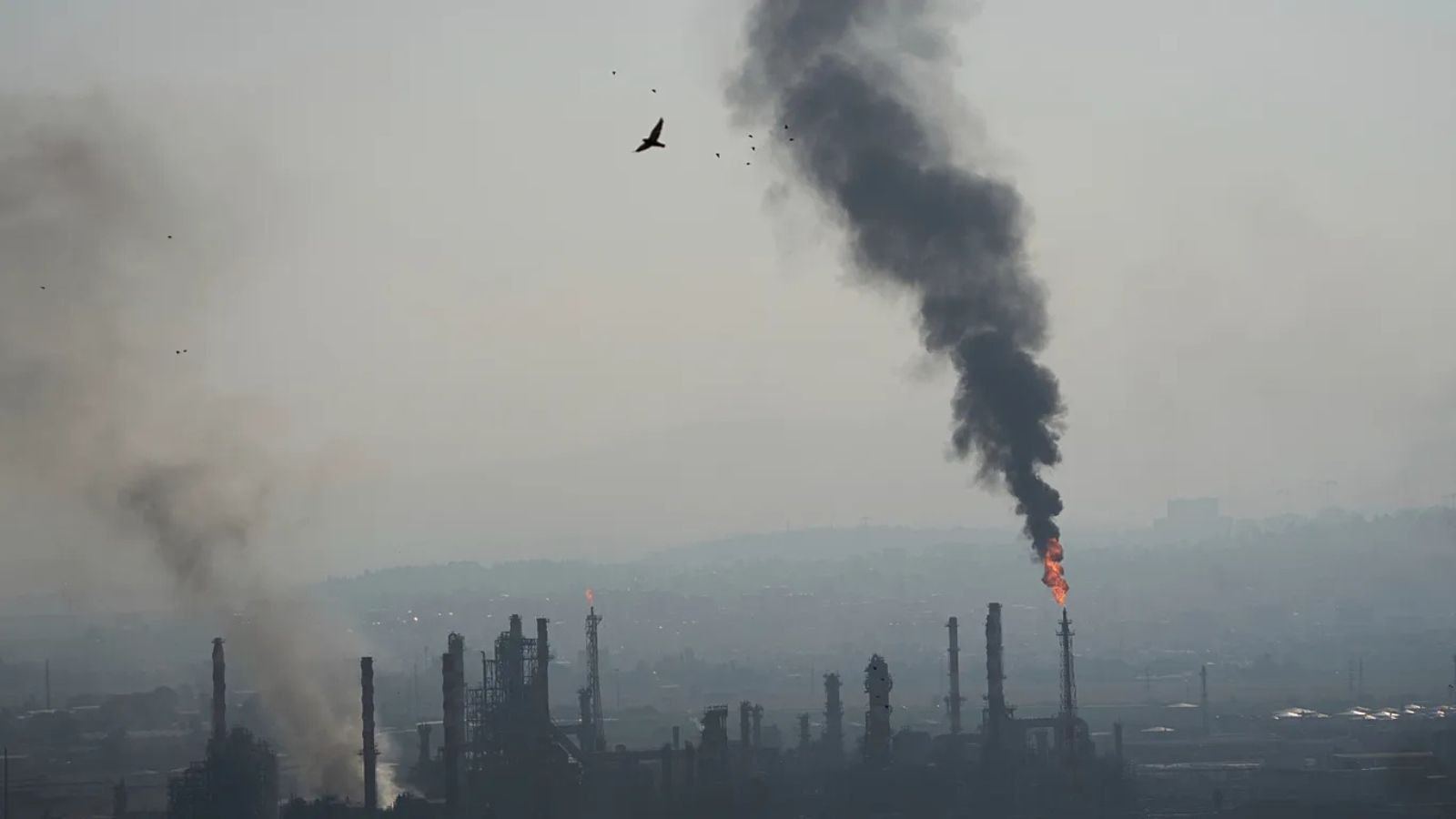
Israeli Defense Minister Yisrael Katz confirmed on Monday that Israel carried out a powerful airstrike on Iran’s largest petrochemical complex in the Assaluyeh region, part of the massive South Pars gas field.
Kabul 24: Katz described the facility as a “central target” responsible for approximately half of Iran’s total petrochemical production, stating that the operation was executed with significant force to damage critical infrastructure.
Iranian media outlets reported that the strike targeted utility companies supplying essential services to the petrochemical plants. Specifically, Mobin Energy and Damavand Energy — which provide electricity, water, and oxygen to the Assaluyeh complex — were hit.
According to sources cited by Energy Press and other Iranian agencies, these companies played a role similar to Fajr Energy in Mahshahr.
As a result, electricity supply to the entire Assaluyeh petrochemical zone is expected to remain cut off until the damaged facilities are repaired and restored.
Local reports indicated explosions and fires at the site, with operations at several petrochemical units, including those linked to Jam and other phases, severely disrupted.
The attack marks a significant escalation in the ongoing conflict between Israel and Iran, directly targeting the heart of Iran’s energy and petrochemical industry located along the Persian Gulf coast in Bushehr province.
This latest strike follows a previous Israeli operation in March against South Pars facilities, which prompted Iran to launch widespread retaliatory attacks on oil and gas infrastructure in several Arab Gulf states, including Saudi Arabia, the United Arab Emirates, and Qatar.
Those counterstrikes caused substantial damage to refineries, LNG terminals, and export facilities, leading to temporary shutdowns, force majeure declarations, and disruptions in regional energy supplies.
Analysts warn that the repeated targeting of energy infrastructure on both sides risks further escalation, potential environmental hazards from fires or leaks, and broader impacts on global energy markets.
The Assaluyeh complex is one of the world’s largest gas processing and petrochemical hubs, jointly developed as part of the South Pars/North Dome field shared with Qatar. Any prolonged outage could affect Iran’s export revenues and domestic industrial output.Iranian officials have not yet issued a detailed official response, but previous patterns suggest the possibility of retaliatory actions.
The incident has heightened concerns about the security of energy facilities across the Gulf region and the potential for the conflict to draw in additional regional and international actors. Both sides continue to exchange threats as the situation remains highly volatile.