
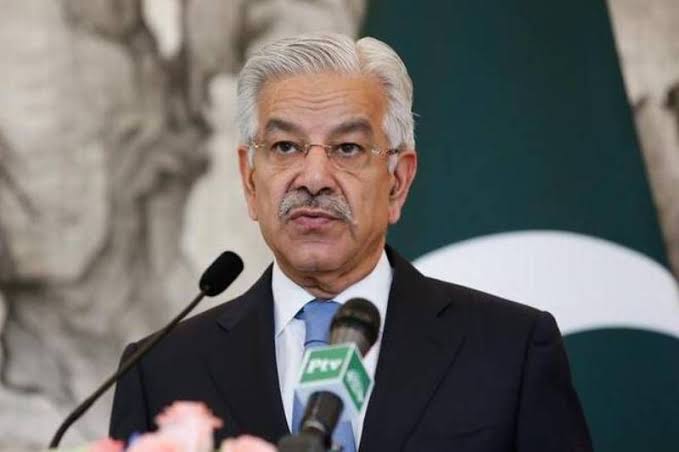
In a session of the Pakistani Parliament, Khawaja Asif, Pakistan’s Defense Minister, launched a strong criticism of Islamabad’s current policy toward Afghanistan, declaring that all dialogues held between the two neighboring countries so far have been fruitless.
Kabul 24: Asif stated that Pakistan had shown flexibility and was ready to accept many of the demands put forward by the Islamic Emirate of Afghanistan.
However, he accused the Afghan side of refusing to provide written guarantees and binding commitments. He emphasized that the lack of formal, written assurances has been the main obstacle to reaching any sustainable agreement.
Responding to suggestions from some lawmakers for continued negotiations, the Defense Minister issued a direct challenge. He urged Pakistani politicians to form a delegation or jirga, travel to Afghanistan themselves, and secure concrete guarantees from the Taliban authorities.
Khawaja Asif said: “If any of the friends who have proposed dialogue can obtain guarantees and travel there with a jirga, we are fully ready. But they should not return empty-handed.
They must bring back guarantees and commitments. We have tried every possible avenue and have failed to secure written assurances and pledges.”These remarks come amid ongoing border tensions, security concerns, and trade restrictions that continue to strain bilateral relations.
Pakistan has repeatedly expressed worries over the presence of anti-Pakistan militant groups on Afghan soil and has demanded stronger cooperation from Kabul.In the same parliamentary session, Khushal Khan Kakar, a member of Pakistan’s parliament, openly criticized the Defense Minister’s position.
He asserted that “Afghanistan is not Pakistan’s enemy” and called for a more constructive approach focused on mutual interests.
Kakar stressed the urgent need to reopen trade routes and borders, highlighting that economic cooperation and commerce could serve as a foundation for reducing tensions and building trust between the two nations.
This exchange in Pakistan’s parliament reflects a clear divide between two competing policy approaches toward Afghanistan: a security-first, cautious stance that insists on binding guarantees, and an economic-pragmatic approach that prioritizes reopening borders, facilitating trade, and minimizing the heavy economic costs of prolonged standoffs.
Currently, the closure of several border crossings and transit restrictions have inflicted serious damage on the economies of both countries, affecting thousands of traders and transporters.
Analysts warn that continuing this situation harms not only Pakistan and Afghanistan but also squanders broader regional opportunities.Given the sensitive geopolitical situation in the region, many observers believe that only sustained, realistic, and result-oriented dialogue can lead to border stability and economic recovery.
A possible visit by a Pakistani parliamentary delegation to Kabul could serve as a practical test of both sides’ genuine willingness to resolve differences.