

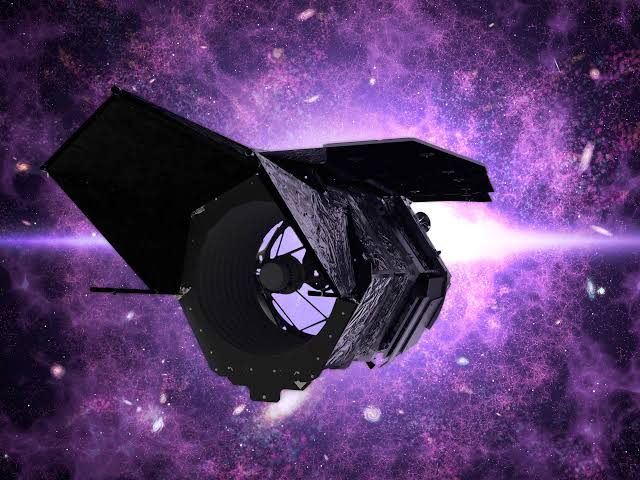
NASA has taken a major leap in mapping the cosmos with the launch of the Nancy Grace Roman Space Telescope from the Kennedy Space Center in Florida. Named in honor of NASA’s first chief astronomer and first female executive, this advanced space observatory embarks on a distinctive mission across the universe.
Kabul 24: This modern instrument will help scientists discover new exoplanets, observe how galaxies evolve, and provide answers to fundamental questions in astrophysics—specifically regarding the mysteries of dark matter and dark energy.
Unlike the Hubble and James Webb space telescopes, which focus deeply on specific, targeted celestial objects, the Roman Telescope is engineered to survey vast swaths of the sky. This observatory is capable of analyzing massive populations of stars, planets, and galaxies all at once.
According to Dr. Noelia Noël, an astrophysicist at the University of Surrey in the UK, the Roman Telescope offers resolution comparable to Hubble but on a panoramic scale. In every single image, it will capture a view at least 100 times larger than Hubble’s field of view.
Dr. Julie McEnery, senior project scientist for the mission, emphasized to the BBC that the primary goal is to conduct the largest survey ever of planets orbiting other stars. She added that the sophisticated instruments aboard will simultaneously study everything else in the universe—from whole galaxies to rare, unusual celestial phenomena.
Key Mission Facts
Namesake: Honors Nancy Grace Roman (NASA’s first female executive and chief astronomer)
Launch Site: Kennedy Space Center, Florida
Core Advantage: Panoramic field of view 100 times larger than Hubble per image
Scientific Goals: Exoplanet discovery, analyzing dark matter and dark energy, and wide-field cosmic mapping