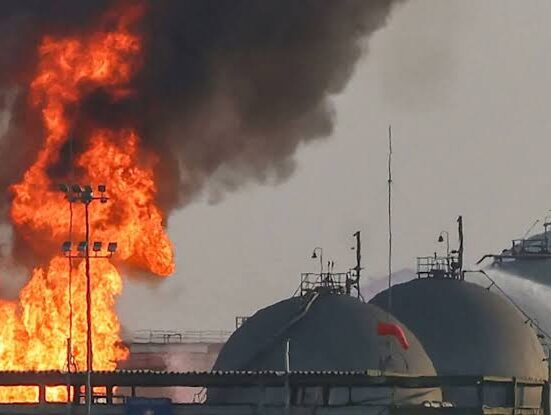

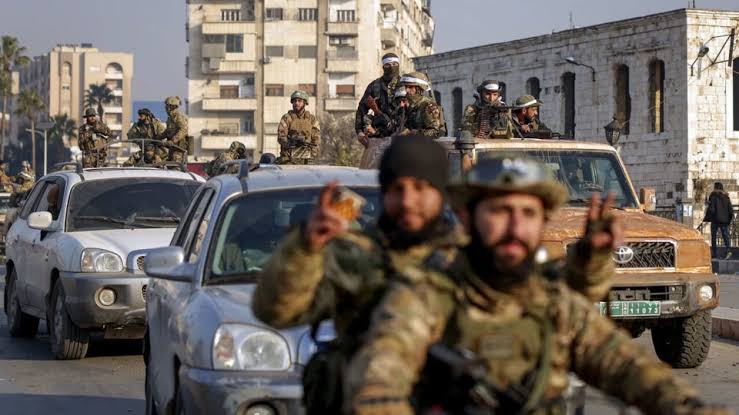
In the Middle East, there’s something called “cold silence.” It’s the space between an explosion in Damascus, a cryptic tweet from Turkey’s Foreign Ministry, and a vague statement from the White House. In that silence, much is said. Today, Israel tore through that silence once again. Missiles struck the Syrian army’s joint command center in Damascus, scribbling a new note on the margins of the Middle East’s evolving map.
Kabul 24: This bombardment wasn’t just an attack; it was a message. A multilayered one. To Turkey, it’s a reminder of the consequences of regional ambition and perhaps an attempt to fill Iran’s void.
To Jolani, it signals that Israel, not Ankara, calls the shots. To the Druze and other regional ethnic groups, it’s a call to trust Israel’s power and patronage and align with its vision for a new Middle East. To Saudi Arabia and other Arab states, it’s a nudge to hasten or reaffirm the Abraham Accords without hesitation. To Iran, it’s Tel Aviv’s turn to flaunt its tightening grip on the region. And to the U.S., it’s a reality check to accept Netanyahu’s bold, self-reliant initiative.Since analysts like Michael Coplow and Raphael Cohen introduced the term “mowing the lawn” into Israel’s security lexicon, we’ve understood Tel Aviv’s love for periodic operations. But now, the game has shifted: this isn’t just trimming the grass; it’s as if they’re sifting the soil anew.Yossi Kuperwasser, a former Israeli military intelligence officer, told The Wall Street Journal: “This isn’t just a message to Damascus.
It’s a signal to Tehran and Ankara that Israel still holds the initiative.” Indeed, Tel Aviv knows Syria isn’t a no-man’s-land; it’s a corridor, stretching from Beirut to Baghdad.Turkey, previously basking in Trump’s praise, now diplomatically states: “These attacks threaten Syria’s stability.” But in the minds of Turkish officials, something else may be brewing. The T-4 base, Turkey’s influence in the north, and the future of Syrian negotiations are far more critical to Erdogan than a blast in Damascus.
Turkey neither wants to provoke Israel, emulate Iran, nor challenge the U.S. As a result, Ankara still clings to its mediator role. But everyone, including the Israelis, knows that mediation in the Middle East is often a pretext for power plays and a hefty share of the spoils.
As strikes continue in Damascus, American diplomats in Vienna, Doha, and Tel Aviv project an intent to contain or halt the attacks. The U.S. appears wary of escalating the crisis, but in practice, it follows whatever path Netanyahu chooses.
In Damascus, Israel didn’t just hit strategic sites; it demolished a “narrative”: the story of Syria’s reconstruction, national unity government, war fatigue from Gaza, Lebanon, and Iran, and Turkey’s growing role. This attack marks a new chapter in “post-war narratives,” where the issue isn’t just missiles and defenses—it’s about who controls the story.Today in the Middle East, military might for preemptive strikes speaks loudest. Analysts warn, no country feels immune, people die, and diplomats spin in circles, citing international law that no one can locate. But the reality on the ground is different: no one, except perhaps Netanyahu, wants a bigger war. Yet everyone is preparing for it