
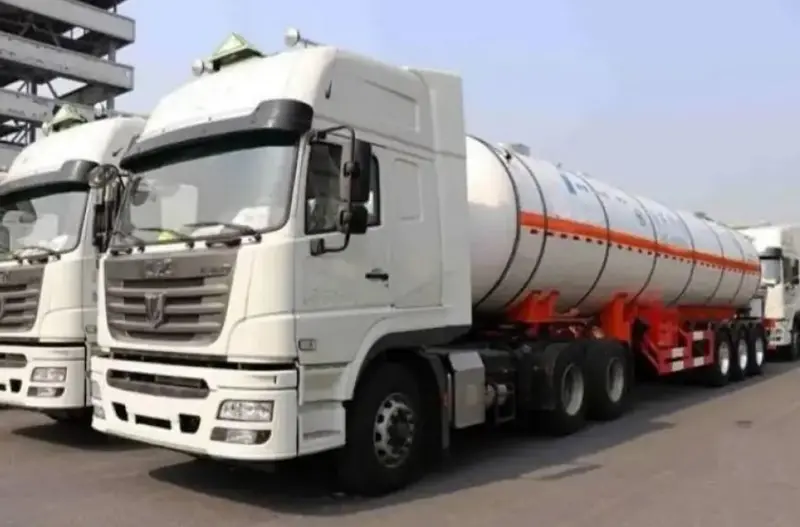
Local authorities in Herat province have announced that over the past seven months, nearly 2,000 tankers carrying sub-standard fuel were identified at the Islam Qala border crossing and sent back to the exporting country.
Kabul 24: According to the state-run Bakhtar News Agency, Mohammad Yusuf Saeedi, spokesman for the governor of Herat, stated that these rigorous inspections aim to protect consumer rights, prevent financial losses for vehicle owners, and curb environmental pollution. He emphasized that quality testing for imported fuel at the Islam Qala custom checkpoint remains strict, and any shipment failing to meet established standards is immediately turned back.
However, local officials have not provided detailed figures regarding the total volume of fuel inspected, the technical parameters used to test quality, or the specific breakdown by exporting countries. The Islam Qala border crossing in Herat serves as one of Afghanistan’s most critical energy transit routes, as the country imports the vast majority of its fuel requirements from neighboring and regional suppliers such as Iran, Turkmenistan, and Iraq.
The influx of low-grade fuel has been a long-standing grievance among Afghan motorists and residents. Poor-quality fuel not only causes severe mechanical damage to engines—imposing heavy repair costs on vehicle owners—but also significantly worsens air pollution in major urban centers like Kabul.
Afghanistan’s annual fuel consumption is estimated at roughly 2.7 million metric tons, with local extraction accounting for barely 10 percent of total demand. Although domestic crude oil extraction in northern basins has expanded in recent years, limited refining capacity, lack of advanced technology, and the need for large-scale infrastructure investments continue to pose major hurdles toward energy self-sufficiency.