
Pakistan’s trade deficit with its nine neighboring countries surged by 30 percent to around $15.9 billion in the fiscal year 2025-2026, according to official data from the State Bank of Pakistan.
Kabul 24: The sharp rise has raised serious concerns among economists about the country’s growing trade imbalance in the region.
Exports from Pakistan to Afghanistan, China, Bangladesh, Sri Lanka, India, Iran, Nepal, Bhutan, and the Maldives fell by 11 percent to $3.953 billion.
Meanwhile, imports from these countries jumped 19.1 percent to $19.886 billion, widening the deficit significantly.The suspension of trade with Afghanistan starting October 10, 2025, had a particularly severe impact.
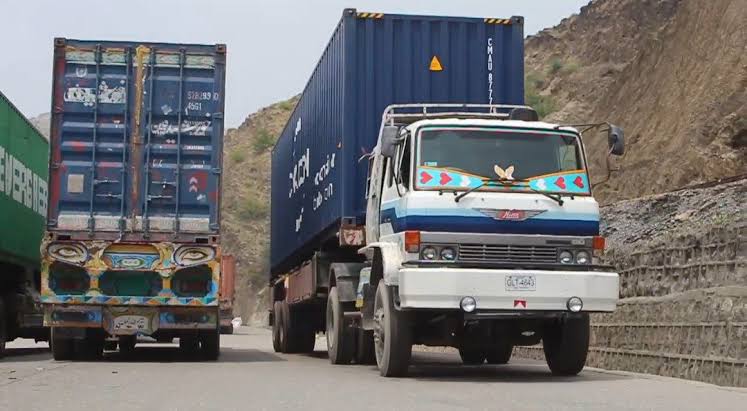
Exports to Afghanistan plummeted 68.9 percent to just $243.7 million, while imports from the country dropped 74.9 percent to $6.5 million. This disruption was a major contributor to the overall decline in regional exports.
China remains Pakistan’s largest trading partner in the neighborhood by a wide margin. Exports to China grew 8.4 percent to $2.684 billion, but imports from China surged nearly 20 percent to $19.538 billion.
Notably, imports from China accounted for 98 percent of Pakistan’s total regional imports, highlighting a heavy dependence on Chinese goods.Exports to Bangladesh and Sri Lanka also declined during the period.
Although exports to India more than doubled, the value remained negligible at approximately $2.9 million.
Trade with other neighbors such as Iran, Nepal, Bhutan, and the Maldives showed limited growth and failed to offset the losses from Afghanistan.
Analysts warn that this widening trade gap could put further pressure on Pakistan’s foreign exchange reserves.
The economy is already grappling with challenges including high inflation, energy shortages, and external debt.
The suspension of Afghan trade not only hurt exports but also disrupted supply chains for certain commodities.
To address the issue, experts recommend diversifying export markets, reducing over-reliance on Chinese imports, and pursuing diplomatic efforts to normalize trade relations with Kabul.
Without proactive trade policies, reversing this deficit will remain a difficult task in the coming years.This significant trade imbalance comes at a time when Pakistan needs stronger regional economic ties to support sustainable growth and stabilize its external account.