
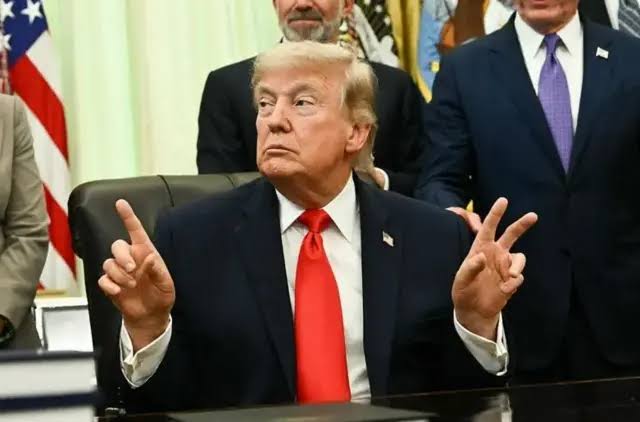
Donald Trump, President of the United States, stated that the peace memorandum with Iran will be signed on Sunday.
Kabul 24: This comes after Pakistan’s Prime Minister also indicated the possibility of signing the agreement within a “24-hour” window.According to the U.S. President, the Strait of Hormuz will reopen immediately after the signing of the peace memorandum.
Trump’s remarks contradict statements from Iran’s Ministry of Foreign Affairs, which has denied that any agreement will be signed on Sunday.
Trump also said that Washington will take control of Iran’s enriched uranium stockpile — which he called “nuclear dust” — once the situation “calms down.”Pakistan’s Prime Minister Shehbaz Sharif announced on Saturday, June 13 (23 Khordad), that the United States and Iran have reached an understanding on the framework of a peace agreement after more than three months of conflict.
He added that the initial memorandum is expected to be signed within the next 24 hours.Sharif, whose country has played a key mediating role in the war, said Pakistan is preparing for the electronic signing of the agreement, after which expert-level negotiations will begin next week.
In his announcement, Trump described the deal as a major step toward preventing Iran from acquiring nuclear weapons.
He emphasized that no money would be paid to Iran under the agreement. The U.S. President also highlighted that the reopening of the Strait of Hormuz — a vital global oil transit route — would happen right after the signing, which is expected to ease pressure on international energy markets.
This development marks a significant diplomatic breakthrough following months of intense fighting.
However, Iran’s Foreign Ministry has pushed back against the timeline, stating that no agreement will be signed on Sunday and that any understanding only represents a framework for further talks.
Prime Minister Sharif, who has been actively involved in shuttle diplomacy between the two sides, expressed optimism that this agreement could bring an end to prolonged tensions in the region.
He noted that Pakistan stands ready to facilitate the next phase of technical discussions.
Experts caution that while the framework agreement is an important step, significant challenges remain, particularly regarding the details of nuclear oversight, security guarantees, and the timeline for de-escalation.
Global markets are closely watching these developments, as the reopening of the Strait of Hormuz could lead to a substantial drop in oil prices and greater economic stability.
If successfully implemented, this memorandum could represent a historic turning point in U.S.-Iran relations after a period of severe confrontation.
Both sides continue to express hope for progress, though the coming days will be critical in determining whether the announced timeline holds.