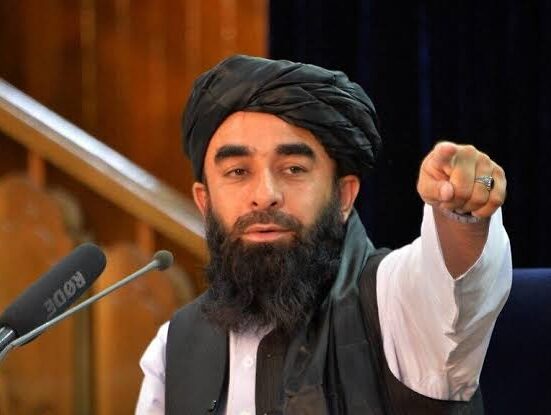


Zabihullah Mujahid, the spokesperson for the Islamic Emirate of Afghanistan, has firmly rejected the recent allegations made by Pakistani Prime Minister Shehbaz Sharif.
Kabul 24: In an interview with TOLO News, Mujahid categorically denied Sharif’s claims, describing them as repetitive, baseless, and harmful to bilateral relations between Kabul and Islamabad.
He stressed that Afghanistan will not allow any external groups to use its territory against Pakistan or any other country.“We strongly reject the claims made by the Pakistani Prime Minister.
These allegations are repetitive and untrue,” Mujahid said. “Afghanistan does not permit any terrorist groups or external elements to operate from its soil or use it against Pakistan or neighboring countries.
Such suspicions, propaganda, and contradictory statements have only damaged ties, destroyed trust, and increased tensions between the two nations. It is regrettable that such remarks are coming from the level of Pakistan’s Prime Minister.”The controversy began after Prime Minister Shehbaz Sharif accused India of supporting terrorist networks inside Afghanistan.
He claimed that these India-backed groups receive financial and military assistance, gather in Afghanistan, and then launch attacks inside Pakistan, particularly in Khyber Pakhtunkhwa province.Sharif stated: “There is no doubt that our eastern neighbor is playing an extensive role in this conspiracy.
It provides money and weapons to these terrorists and their groups from every direction. These terrorists assemble in Afghanistan and then carry out attacks in Khyber Pakhtunkhwa. Other foreign hands are also involved, though I will not elaborate further on that at this moment.”Relations between Afghanistan and Pakistan have remained strained for months, with both sides frequently exchanging accusations over cross-border terrorism, border security, and the presence of militant groups.
Pakistani officials have repeatedly claimed that anti-Pakistan elements enjoy safe havens inside Afghanistan, while Afghan authorities deny these charges and accuse Pakistan of interfering in their internal affairs.
Political analysts and regional experts urge Pakistan to move beyond public accusations and address its security challenges through diplomatic channels, intelligence cooperation, and constructive dialogue with Kabul.
They argue that continued blame games only deepen mistrust and hinder practical solutions to shared problems such as border management and counter-terrorism.
Experts warn that escalating rhetorical tensions could further destabilize the region, negatively affecting economic cooperation, trade, and humanitarian efforts.
Both countries are called upon to prioritize de-escalation and engage in meaningful negotiations to rebuild confidence and promote regional stability.