
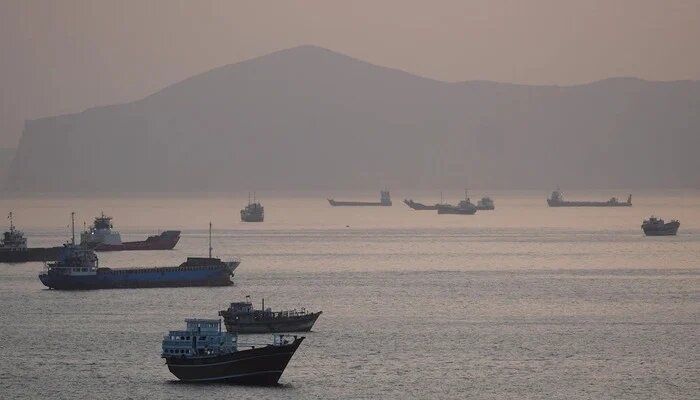
Strait of Hormuz closed again! Just three days after the nominal reopening of this waterway to vessel traffic, Iran’s military command announced minutes ago that it will close the strait once more.
Kabul 24: The continuation of Israeli army attacks in Lebanon is cited as the main reason for this decision.This announcement comes at the same time as reports of Iranian and American diplomatic representatives traveling to Geneva to continue talks.
The re-closure of the strait alongside preparations for tomorrow’s meeting in Geneva demonstrates Iran’s commitment to pursuing the diplomatic path while maintaining its deterrent levers.
Control over the Strait of Hormuz is Iran’s most important bargaining chip, which it currently seeks to use to force the United States to restrain Israel’s behavior.
Can the United States force Tel Aviv to withdraw from Lebanon and stop its attacks at this stage?It is clear that the White House possesses numerous political, economic, and diplomatic tools to exert pressure on its recalcitrant ally.
However, the issue is not merely about using these tools. Unlike public opinion in Iran and the United States — which generally supports ending the war — Israel’s domestic front is not satisfied with the current outcome and prefers full-scale war to eliminate threats over the current half-hearted peace.
This makes the situation difficult for Netanyahu and his opposition rivals on the eve of elections. Preserving freedom of action against Iran and Hezbollah has become a matter of prestige — indeed, a national issue — in Israeli domestic politics.
No political faction can show excessive flexibility on this without paying a heavy price.The Trump administration’s willingness to pressure Israel is also not unlimited. Trump is under pressure from both Democrats and Republicans for his unconventional softness toward Iran.
A complete political break with Israel over the Iran file would further damage his political standing.The third side of this complex equation is Iran itself.
Using the Hormuz card is not without limits. A full return to normal operations would make re-closing the strait much more difficult — especially if the violation of the agreement comes from Israel rather than the United States.
Logically, there appears to be no direct connection between reacting to Israeli attacks and maritime traffic in the Persian Gulf.The coming hours and days will be decisive in determining the future of this agreement.
The main challenge is securing Israel’s compliance with the deal — something that does not appear easy to achieve.
Iranian missiles cannot deter Israel from attacking Lebanon, nor is Trump’s scolding the final word. In the end, the heaviest burden falls on the Strait of Hormuz. Using this card is neither cost-free nor free from timing constraints.
Salahuddin Khadiv