

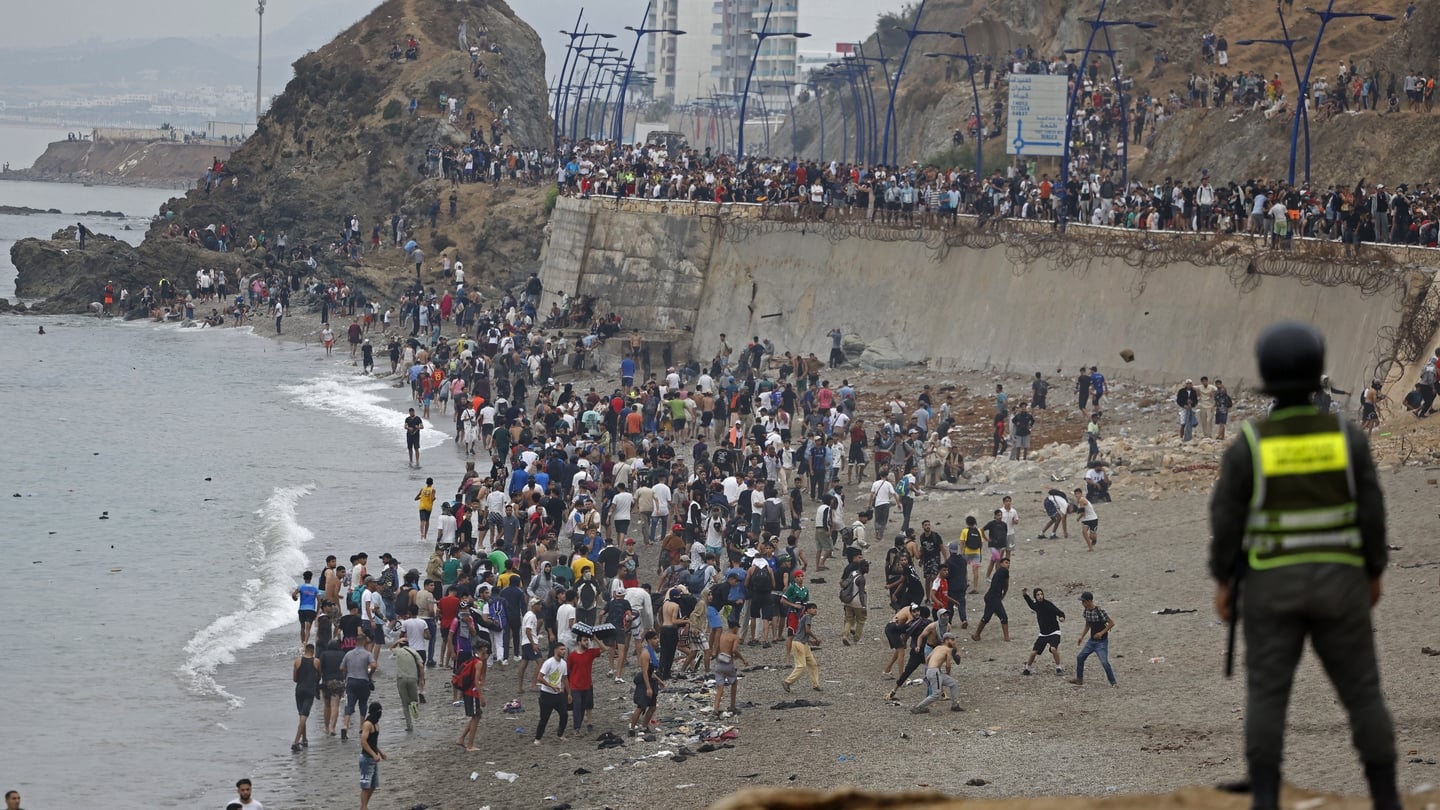
A sudden and massive influx of irregular migrants into Spain’s North African enclave of Ceuta has triggered fresh tensions among European Union member states.
Kabul 24: On Thursday, thousands of people crossed from Morocco into the autonomous Spanish city, overwhelming border fences in one of the largest single-day entries recorded in recent years.
According to reports, approximately 50,000 migrants entered Ceuta beginning early Thursday morning.
Spanish authorities later confirmed that at least 57 people died during the chaotic crossings. Details surrounding the exact circumstances of the deaths remain limited, but accounts point to extreme overcrowding, falls, and difficult conditions at the border.Spain’s Interior Ministry, cited by the EFE news agency, stated that by Friday afternoon more than 48,300 of the roughly 50,000 people who had entered the enclave had already been returned to Morocco.
The rapid returns reflected close operational coordination between Spanish and Moroccan security forces in the hours following the surge.
The scale of the arrivals prompted an immediate response from Italy. Rome formally announced it was temporarily suspending the application of Schengen rules with Spain and reinforcing its own border checks with the country.
Italian officials described the measure as precautionary, aimed at preventing secondary movements of migrants toward other EU states while the situation in Ceuta is brought under control.Ceuta, together with Melilla, constitutes one of the European Union’s only land borders with Africa.
These enclaves have long served as pressure points for irregular migration routes. The latest episode has once again highlighted the challenges of managing external borders, the need for sustained cooperation with transit countries such as Morocco, and the political sensitivities that arise when large numbers of people arrive in a short period.European governments are watching developments closely.
While most of those who entered have been returned, residual numbers remaining in Ceuta continue to raise humanitarian and logistical concerns. Rights organizations have called for a full investigation into the deaths and for adequate assistance to be provided to those still present.
The events of the past two days underscore the persistent fragility of Europe’s southern frontier. Without reinforced joint mechanisms for border management and clearer burden-sharing arrangements among EU members, similar surges risk generating further diplomatic friction and operational strain.
For now, Spain continues the process of restoring order in Ceuta while Italy maintains heightened controls, illustrating how quickly a localized border crisis can ripple across the Schengen area.