
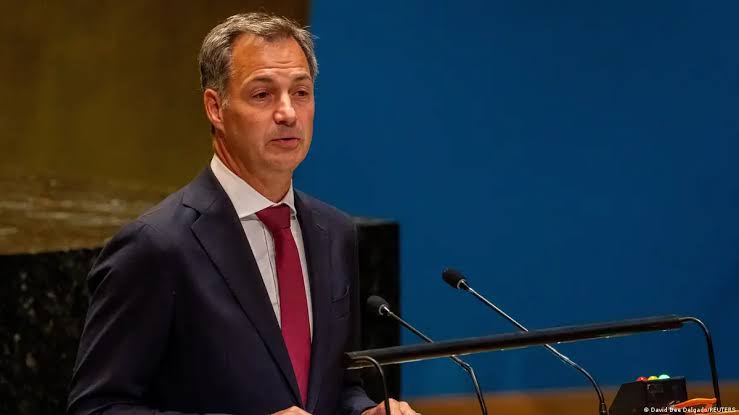
The Administrator of the United Nations Development Programme (UNDP) warned of irreparable consequences should the international community turn its back on Afghanistan, emphasizing the critical need for continued global engagement.
Kabul 24: In an interview with *Foreign Policy*, the senior UN official stressed that abandoning Afghanistan amid its complex and widespread challenges would impose severe long-term costs on the international community.
Alexander De Croo highlighted women’s right to work and girls’ right to education as fundamental issues, describing the ban on girls attending school beyond age 12 as entirely unacceptable. From a development standpoint, he noted that sidelining women inflicts structural damage on the country, as Afghanistan facing vast humanitarian and economic needs cannot afford to ignore the talent and capability of half its population.
He reaffirmed that women’s rights remain a primary concern for UN member states and a central topic in ongoing discussions with Afghan governing authorities.
Despite deep policy disagreements, the UNDP Chief argued against isolating Kabul. He warned that ignoring Afghanistan today guarantees that the international community will face far greater security, economic, and humanitarian repercussions in five to ten years. Furthermore, he urged international support for managing returning Afghan migrants and financing alternative crop livelihoods for farmers, noting that current joint efforts to eradicate poppy cultivation and drug production have yielded positive results.
The UNDP Administrator’s remarks reflect a pragmatic, dual-track framework within the international community regarding Afghanistan. By tying women’s rights directly to economic development, the UN underscores that sustainable recovery is impossible without gender inclusion. Concurrently, by warning against isolation, the leadership highlights the risks of repeating historical errors that led to regional instability.
This position signals that international agencies view conditional, pragmatic engagement—rather than total disengagement—as the only viable strategy to address Afghanistan’s long-term challenges.