
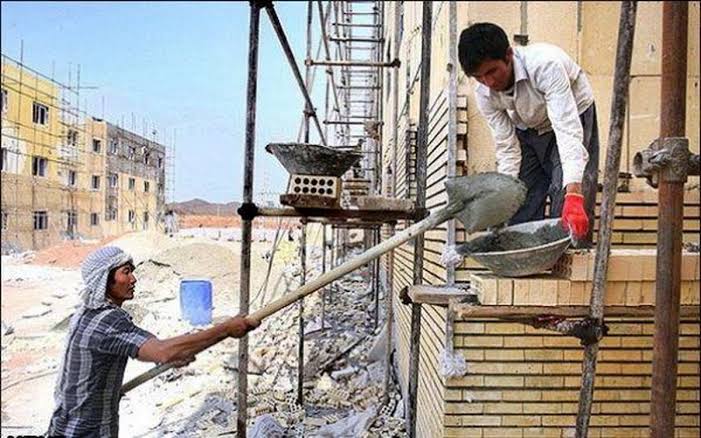
The mass deportation of Afghan workers from Iran has led to a severe labor shortage in the country’s construction industry.
Kabul 24: According to IRNA, Iraj Rahbar, head of the Tehran Construction Union, stated that over 50% of Tehran’s construction workforce consisted of Afghan nationals.
These workers were primarily employed in low-wage, labor-intensive roles such as general labor, rebar tying, stonework, architecture, and cement work, where Iranian workers showed little interest due to the demanding nature of the jobs and the lower wages Afghan workers accepted.
Rahbar, in an interview with ILNA, explained that the Iranian government’s recent decision to deport Afghan nationals has caused significant disruptions, halting or delaying numerous construction projects.
Replacing Afghan workers with Iranian labor is a time-consuming process, requiring training and adaptation, which has led to increased costs and project delays. He warned that the ongoing policy could plunge the construction sector, a key driver of Iran’s economy, into a deeper crisis if not addressed.Meanwhile, Jan Egeland, head of the Norwegian Refugee Council, expressed alarm over the humanitarian fallout of these deportations.
He reported that over 1.5 million Afghans have been forcibly returned from Iran, many of whom lack shelter, basic necessities, and livelihoods in Afghanistan.
Egeland called for an immediate halt to forced returns and urged the international community to bolster humanitarian aid for Afghanistan and host countries.
He noted that 22 million people in Afghanistan were already in need of humanitarian assistance before the deportations began, and the influx of returnees has further strained the country’s limited resources.
The situation has not only disrupted Iran’s construction industry but also exacerbated a humanitarian crisis in Afghanistan, highlighting the urgent need for more compassionate migration policies and increased global support