
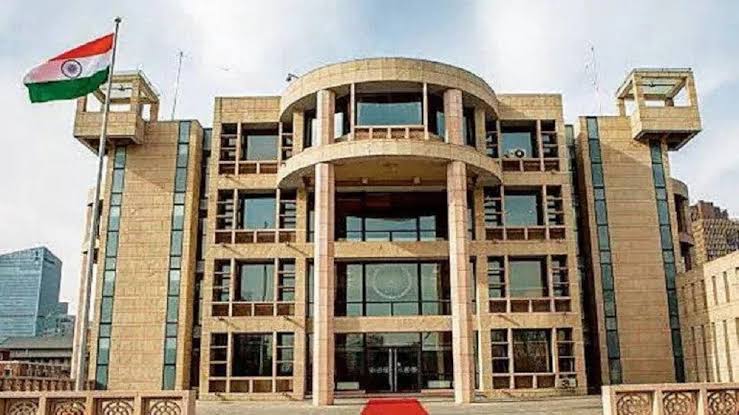
Randhir Jaiswal, Spokesperson for India’s Ministry of External Affairs, announced at a recent press conference that New Delhi is actively reviewing ways to enhance the performance and expand the capacity of its embassy in Kabul.
Kabul 24: He emphasized that once these assessments are complete, the Indian Embassy in Afghanistan will fully resume its normal functions.Jaiswal told reporters: “As we have previously stated, our technical mission has been upgraded to embassy level. We are currently examining the duties, responsibilities, ways to increase staff numbers, and operational capacity. These matters are under review and will be implemented at the appropriate time.” This statement reflects India’s firm commitment to deepening its diplomatic presence in Afghanistan following recent political shifts.The decision follows an earlier announcement by India’s External Affairs Minister, Subrahmanyam Jaishankar, during the official visit of Amir Khan Muttaqi, Foreign Minister of the Islamic Emirate of Afghanistan, to New Delhi. Jaishankar confirmed that India would elevate its diplomatic engagement in Kabul to full embassy status.
The meeting, held within the framework of bilateral talks, laid the groundwork for concrete steps to strengthen ties.India has long been a key development partner for Afghanistan, investing billions of dollars in infrastructure projects such as the Salma Dam, roads, hospitals, and educational programs.
The resumption of full embassy operations is expected to sustain and expand India’s role in humanitarian, educational, and developmental spheres.Political analysts believe that the full reactivation of the Indian Embassy will significantly strengthen bilateral relations.
However, they caution that closer ties with India should not come at the expense of Afghanistan’s relations with other countries.
Experts stress the importance of Kabul pursuing a balanced and inclusive foreign policy to avoid regional geopolitical tensions.Amid Afghanistan’s ongoing economic and security challenges, India’s return to full diplomatic operations sends a positive signal to the international community.
This move demonstrates New Delhi’s willingness to engage constructively with the current Afghan government without implying formal recognition.
Analysts suggest that India’s pragmatic approach could serve as a model for other nations considering increased engagement in Afghanistan.
Expanding the embassy’s capacity will involve recruiting additional diplomats, offering broader consular services, and improving coordination on joint projects. India has consistently emphasized unconditional humanitarian assistance, a policy it has maintained even under the Taliban-led administration.
The embassy’s reactivation will also facilitate greater ease for Afghan citizens in India and vice versa.Ultimately, these developments are part of India’s broader South Asia strategy. By reinforcing ties with Kabul, New Delhi aims to maintain its influence amid regional competition.
However, the success of this approach depends on Afghanistan’s ability to manage multilateral relations effectively. Experts recommend that the Islamic Emirate prioritize balanced diplomacy to maximize opportunities without triggering unnecessary sensitivities.
Confirmed by India’s Ministry of External Affairs, this news has raised hopes for more sustained cooperation. Further details are expected in the coming weeks, potentially marking a turning point in India-Afghanistan relations