

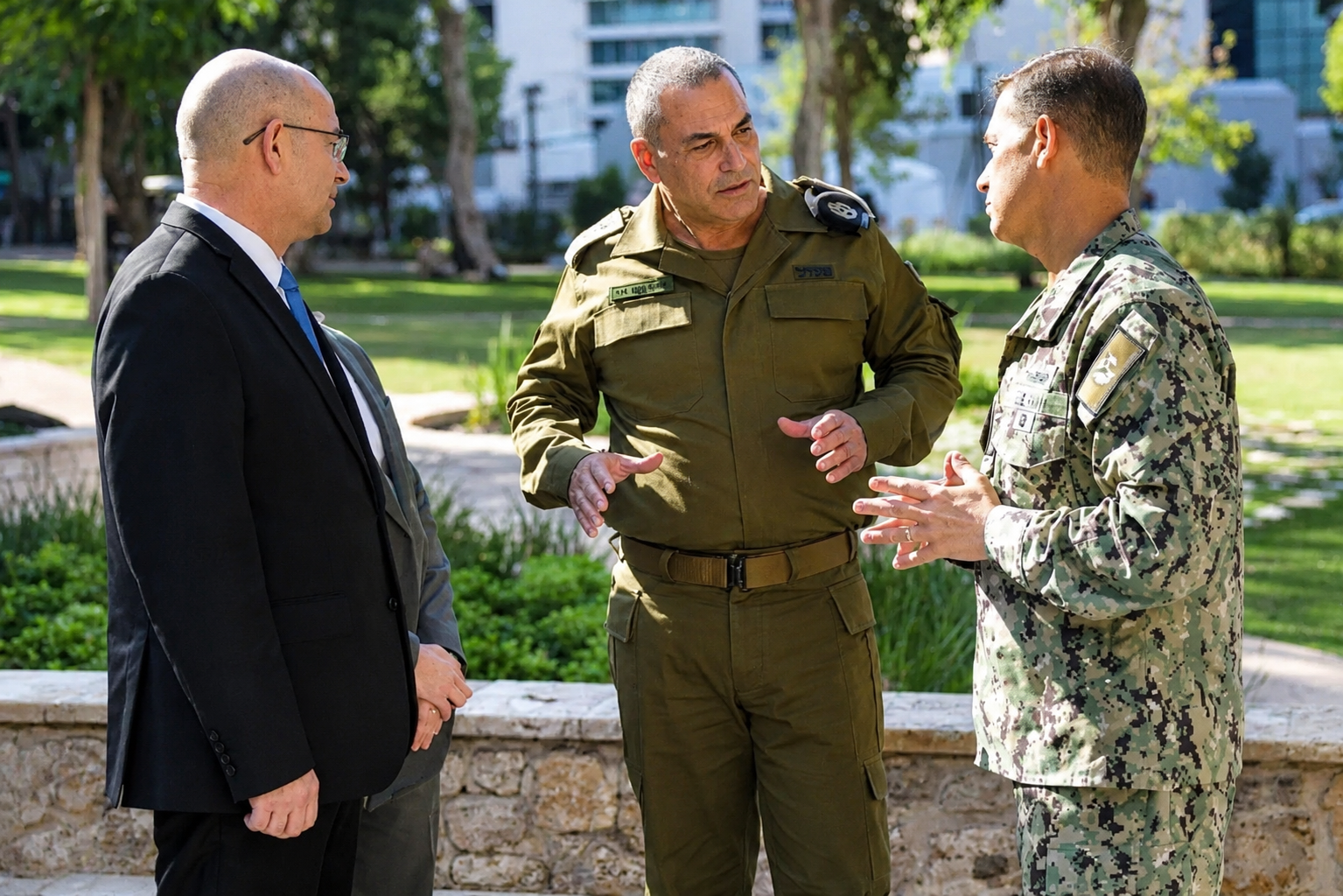
While all eyes are fixed on the trilateral summit of Trump, Putin, and Xi in Shenzhen, China, the trilateral meeting between the CENTCOM commander, Israel’s Chief of the General Staff, and the head of Mossad appears far more consequential—a meeting with a purely Iranian agenda focused on potential preparations for a new round of war against Iran.
Kabul 24: This meeting, which reportedly took place today, alongside a range of other news and indicators, has fueled more serious speculation about the likelihood of war resuming.
In the previous note, it was argued that describing the Shenzhen summit as a “second Yalta” suffers from a kind of analytical flaw. Yalta was not a command room or headquarters for dividing the world; rather, it was a framework for coordinating the victorious powers and dividing the spoils and gains achieved as a result of bringing World War II to a close.
Unlike 1945, no war has ended today, nor has any major international file reached a stage of compromise. The wars involving Iran and Ukraine have become examples of small and medium powers standing up to major powers through the asymmetric use of low-cost technologies and geopolitical advantages.
With this in mind, the Shenzhen summit resembles not a second Yalta, but rather the 1943 Tehran Conference.
Yet can Trump’s presence at the upcoming trilateral summit be seen as a kind of political and diplomatic annex to today’s meeting of U.S. and Israeli military and intelligence chiefs?
It is possible. Following the collapse of the latest round of mediation efforts, the Iran file has reached a dangerous impasse—a deadlock that must either be broken by resorting to war or prolonged through an exhausting marathon of naval blockade and the continued closure of the Strait of Hormuz.
Iran’s more assertive behavior in recent weeks and days, especially after the failure of negotiations, indicates that Tehran is trying to shift part of the pressure from naval blockade and aerial isolation onto its Arab neighbors—a calculated tactic to distribute costs and pressures, without necessarily leading to all-out war.
All eyes are now on the response of the United States and Israel: how they will draw the thin line between war and semi-war, and to what extent domestic political imperatives, alongside the possible closing of windows of political opportunity, will shape their calculations and decisions.
Salahuddin Khadiv