
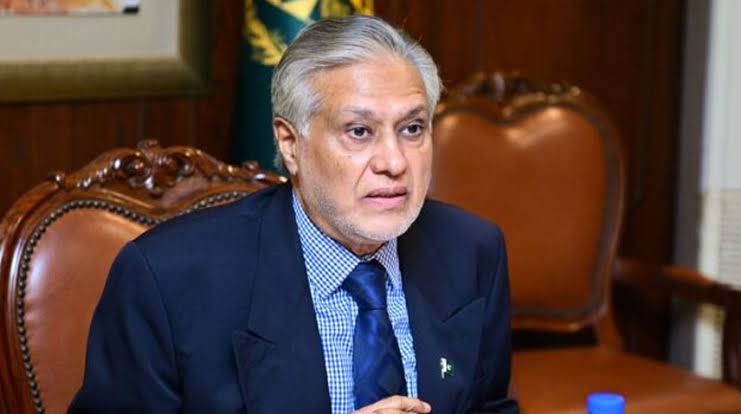
Muhammad Ishaq Dar, Deputy Prime Minister and Foreign Minister of Pakistan, has stated that the failure of the South Asian Association for Regional Cooperation (SAARC) has prompted Pakistan to pursue trilateral cooperation frameworks involving Afghanistan, China, and Bangladesh.
Kabul 24: Speaking at the conference of the South Asian Federation of Accountants in Lahore on Friday, Dar said that SAARC has “unfortunately failed to become operational,” significantly limiting regional economic integration and cooperation.
He emphasized that Pakistan is now actively seeking alternative regional platforms to strengthen economic ties and boost trade. Among these, trilateral formats such as China-Pakistan-Afghanistan and China-Pakistan-Bangladesh have gained particular importance as practical mechanisms to move forward.
Dar stressed that South Asia cannot remain in isolation. With a population of nearly two billion people, the region continues to lose massive economic opportunities due to weak cooperation among neighboring countries.
SAARC was established in 1985 to promote economic integration, trade, development, education, and cultural exchanges among eight member states: Afghanistan, Bangladesh, Bhutan, India, Maldives, Nepal, Pakistan, and Sri Lanka.
However, in recent years, the organization’s effectiveness has been severely undermined by persistent political tensions — particularly between India and Pakistan.
As a result, SAARC summits have been stalled for years, and regional engagement has dropped dramatically.
This deadlock has forced Pakistan to explore new avenues for economic collaboration. By focusing on trilateral partnerships with China — its key strategic ally — Pakistan aims to enhance connectivity, develop infrastructure, expand market access, and increase trade volumes.
Afghanistan, as an important western neighbor, and Bangladesh, with its rapidly growing economy, are seen as vital partners in these initiatives.Analysts view this shift as a strategic evolution in Pakistan’s foreign policy moving away from ineffective multilateral mechanisms toward more focused, result-oriented bilateral and trilateral arrangements.
Such cooperation is expected to open new doors for economic growth, infrastructure development, and regional stability.However, the success of these trilateral frameworks will largely depend on strong political will, removal of trade barriers, and building mutual trust among the participating nations.
If implemented effectively, these initiatives could serve as a model for other South Asian countries to bypass the SAARC impasse and unlock the region’s vast economic potential.