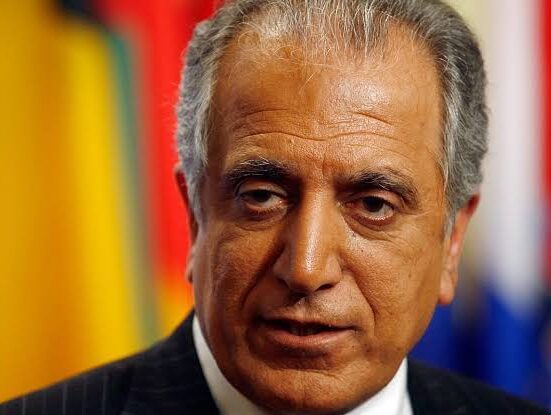

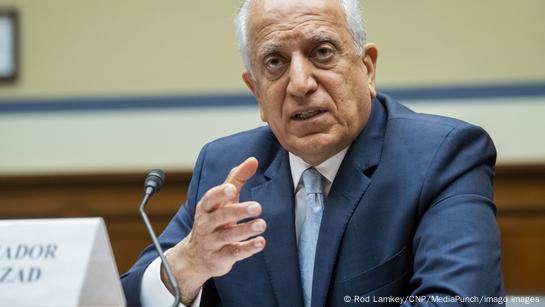
Zalmay Khalilzad, the prominent Afghan-American diplomat and former U.S. Special Representative for Afghanistan Reconciliation, has issued a sharp rebuke to a recent media report alleging that Mullah Abdul Ghani Baradar, a top Taliban leader and architect of the Doha peace deal, abruptly hung up on then-President Donald Trump during a March 2020 phone call.
Kabul 24: The claim, published by a reputable outlet, sparked widespread speculation in political and media circles, reigniting debates over the credibility of the Afghanistan peace process.
Khalilzad, who played a pivotal role in U.S.-Taliban negotiations, dismissed the story as “fake news” in a pointed post on X (formerly Twitter). He wrote: “This was a friendly and constructive conversation that ended respectfully.
A professional interpreter hired by the U.S. State Department handled the translation.” These remarks not only restore the official narrative of the call but also underscore its diplomatic decorum.
The conversation occurred just weeks after the February 2020 Doha Agreement, a landmark accord Khalilzad helped negotiate, which outlined a gradual U.S. troop withdrawal in exchange for Taliban commitments against terrorism and intra-Afghan talks.
In a follow-up in the same post, Khalilzad unleashed a broader critique: “If someone has no real news, no access to decision-makers, and no journalistic principles based on reporting the truth, they naturally resort to ‘fake news.'” This salvo highlights ongoing tensions between diplomatic realities and media portrayals in the post-Doha era.
Khalilzad, with his extensive foreign policy resume—including service on the National Security Council under George W.
Bush—has long championed transparency and direct sourcing. He had engaged repeatedly with Baradar, the Taliban’s political chief in Qatar, during years of shuttle diplomacy.
The episode unfolds amid Afghanistan’s lingering fallout from the Doha deal. Following the U.S. withdrawal in August 2021 and the Taliban’s return to power, key provisions—like inclusive talks with the former government—were sidelined.
The recent report, apparently based on anonymous sources, has reopened old wounds, questioning the integrity of diplomatic memoirs.
Analysts warn that such narratives could undermine current stabilization efforts, including limited Taliban engagement with the international community.
Khalilzad’s response, which garnered over 10,000 views on X, reaffirms his dedication to safeguarding his negotiation legacy.
In an age where disinformation erodes diplomacy, such pushbacks can bolster public trust. Yet, this incident serves as a stark reminder: Afghanistan’s peace demands enduring commitment from all sides, far beyond a single phone call.