

Last night’s ultimatum by Trump has left little doubt about the possibility of direct U.S. involvement in the war against Iran.
This poses a direct challenge to Iran’s strategy of prolonging the conflict to erode Israel’s resilience.
Kabul 24: Facing Israel’s technological superiority and air dominance, Iran aims to extend the war, imposing maximum insecurity on its adversary.
Keeping Israel’s population in shelters, escalating economic costs, and ultimately hoping for the depletion of Iron Dome interceptors form the core of Tehran’s defensive strategy.
It is highly likely that Iran seeks an outcome similar to the 33-day Israel-Hezbollah war.
A war in which Hezbollah not only survived but also managed to impose a relatively balanced ceasefire on its enemy.
In contrast, Israel is actively working to avoid this scenario by drawing the U.S. into the conflict.
Given these dynamics, the U.S.’s final stance is decisive.
For Trump personally, direct involvement in the war is not a desirable option. His preference is to outsource the conflict to his regional security contractor, Israel.
On the other hand, psychologically, the patience of the controversial U.S. president, like Israel’s resilience, is limited and predictable.
Unlike his predecessors, Trump has little appetite for complex and challenging negotiations, seeking immediate and tangible results.
For instance, the re-emergence of the current crisis, say in six months or a year, would be a personal nightmare and a political disaster for him.
Thus, he views Israel’s attacks as leverage to pressure Iran into relinquishing its primary demand: maintaining the right to uranium enrichment.
It can be assumed that his two-week ultimatum to Iran is based on a combination of these concerns and motivations:
This two-week period is roughly the time needed for Israel’s Iron Dome system to exhaust its interceptors, potentially forcing the U.S. to enter the war.
If Israel’s interceptor missiles run out, Iran could easily target its depths even with first-generation missiles.
This could trigger a natural U.S. response. It is worth noting that in the October 1973 war, when signs of Israel’s partial defeat emerged in the first three days, the U.S. turned the tide with its famous airlift.
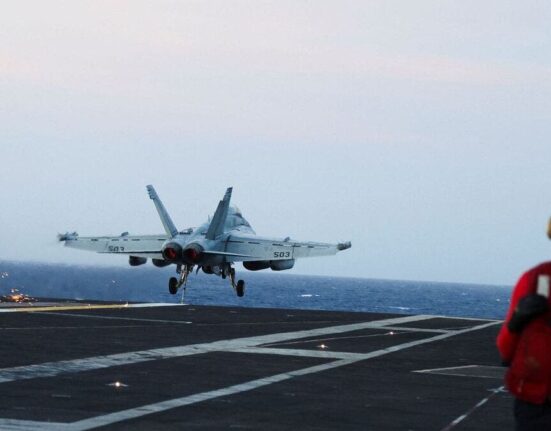
Additionally, this ultimatum may provide the time needed to deploy U.S. naval ships and warships to the Persian Gulf to prepare for a potential attack on Iran.
These measures are critical to counter Iran’s potential closure of the Strait of Hormuz and attacks on U.S. bases in the region.
It is unlikely that Iran, under war conditions, would abandon enrichment and join the currently defunct political process.
Beyond deep distrust in political measures as tactics of deception and surprise, relinquishing the right to enrichment would strip Iran of its last tools for negotiation and leverage.
In the current context, where Iran’s skies are a battleground for hostile drones and aircraft, this would amount to strategic self-sabotage.
Tehran’s current tactic is to secure a ceasefire and avoid negotiations under fire.
Iran is seeking to persuade Trump to pressure Israel to halt military operations, paving the way for talks. The likely incentive it offers is accepting certain restrictions beyond the JCPOA agreement.
The coming days are fateful and decisive. Israel has made its decision and embarked on a dangerous adventure.
However, the situation in Tehran and Washington is different. Trump clearly hoped that military developments would outpace and overshadow the political process, avoiding the need for a major decision. This has not materialized so far.
Iran, facing an all-out proxy war from the Western world, is also at a crossroads.
Now, Trump’s decision is the determining factor.