
For those devoted to the ideals of revolutionary romanticism, who see politics as nothing but relentless, uncompromising struggle, this is undoubtedly a tragic moment.
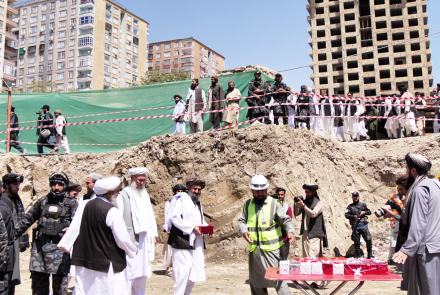
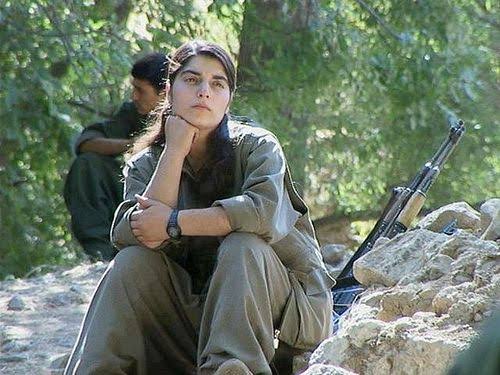
Kabul 24: A historic moment of farewell to arms and descent from the mountains as the impregnable fortress of Kurdistan’s movements!Yet, beyond the usual grief and sorrow, this scene signifies the end of one era and the dawn of a new one.
A new era has begun in the Middle East, and the balance of power has shifted dramatically.It can be boldly stated that there is a logical and functional synchronicity between what is unfolding in the ruins of Gaza, the crowded streets of Beirut’s southern suburbs, and the transformations in the mountains of Kurdistan.
The PKK, Hamas, and Hezbollah are likely the last classic armed movements of our century, descendants of the first generation of guerrilla movements from the early twentieth century.
The simultaneous issue of disarming Hamas, Hezbollah, and the PKK is by no means coincidental.
It is the prelude to a new Middle East, one that Netanyahu promised after the October 7 attack.Of course, Israel’s fugitive prime minister is not the creator of this new Middle East. He merely unveiled it.
Or rather, the October 7 attack lifted the curtain on it.
For some time now, the balance of power in its material sense has been transformed by the advent of artificial intelligence, the deepening of the digital revolution, and the weaponization of space—a new kind of Star Wars.
Comparing the U.S. wars with Iraq twenty or thirty years ago, which, despite immense efforts, never once succeeded in targeting Iraq’s leadership, with Israel’s successful assassinations over the past two years reveals this rupture.
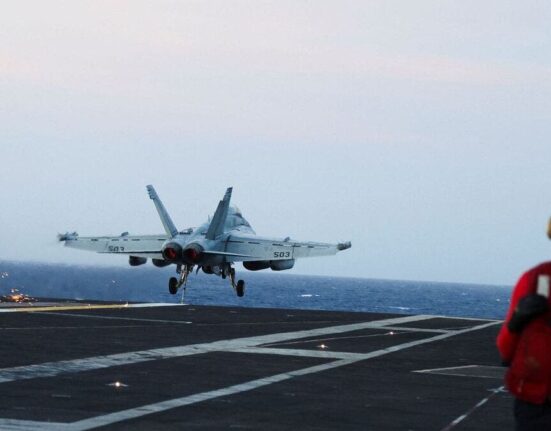
For advanced armies, ground forces have lost their former significance and even their traditional meaning, while air forces have become the decisive and fate-determining factor in the battles of this century.Guerrilla movements, despite their immense suffering and sacrifice, are primarily composed of ground-based fighters and, in terms of weaponry and equipment, are at least a century behind their targeted states.
Israel and, to some extent, Turkey—emerging regional powers with ambitions to become global players—stand at the forefront of this transformation.This, of course, does not imply their supremacy in the soft and normative aspects of power.
Parallel to the transformation in the quality and quantity of weaponry, a great revolution has emerged in the realm of public opinion and the formation of a global online civil society.
Technology has empowered people just as much, allowing governments less room than ever for secrecy and coercion without cost.Kurds have become a significant part of Turkey’s institutional politics, and their civil resistance, street presence, and electoral participation are far more effective in advancing the Kurdish cause than the firing of Kalashnikovs.
Undoubtedly, sooner or later, from the phoenix of Gaza, an independent Palestinian state will rise.Israel is the strongest state in the Middle East, but it has lost the global battle for public opinion and holds a lower standing among European governments than before.
A Faustian state, it has gained supernatural power by selling its soul to the devil. But its Achilles’ heel is the evil from which its power arises.
This evil even terrifies Western governments.
In short, the sorrowful moment of bidding farewell to arms is synonymous with a revolution in the realm of geopolitics.
Those who grasp the logic of geopolitics sooner are the true winners of this era.
There is no longer room for theological perspectives or views detached from the orbit of realism.