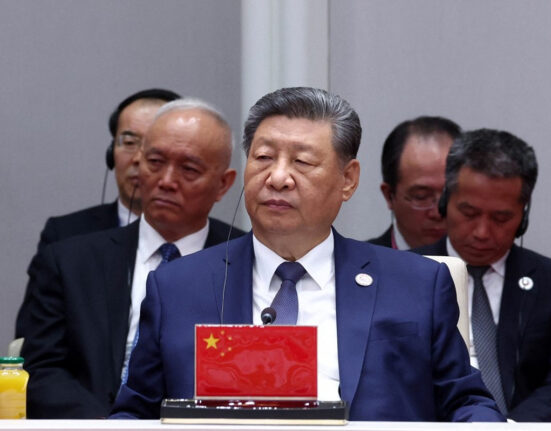

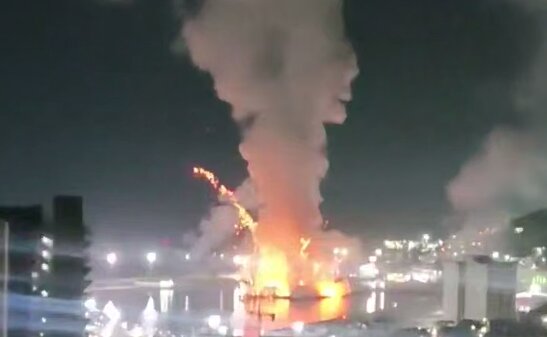
Just a few hours after Maduro, the President of Venezuela, hosted a high-level Chinese delegation, the bombing of Caracas—including the presidential palace—began on Trump’s orders.
Kabul 24: This timing dramatically recalls NATO’s bombing campaign against Yugoslavia in 1999.The 79-day bombing of Yugoslavia lacked UN Security Council authorization, and China and Russia were staunchly opposed to it. During the bombing of Belgrade, the Chinese embassy was mistakenly targeted, killing and injuring several staff members.
After eleven weeks and the near-total destruction of military, economic, and industrial infrastructure, Slobodan Milošević, the leader of Yugoslavia at the time, surrendered and accepted NATO’s conditions.This was the first air campaign in history to achieve victory without the use of ground forces.
The military defeat eroded the remaining legitimacy of Milošević—known as the Butcher of the Balkans—among Serbian nationalists, and a few months later, he was overthrown through a combination of revolution and foreign war.Of course, NATO’s official mission was not regime change but forcing Belgrade to withdraw its forces from Kosovo—a goal that had not been achieved through political pressure and economic sanctions.
Although Trump’s military plan is not exactly known, it is clear that he prefers the Yugoslavia model over those of Iraq and Afghanistan.
From appearances, the initial list of bombings targets only military objectives, but it is unclear whether, if Maduro does not step down, vital infrastructure such as water and electricity facilities and refineries might be targeted to incite the people, following the Yugoslavia pattern.
Venezuela’s army is far weaker than the former Yugoslavia, and the economic crisis has eroded the social base of the Bolivarian regime far more than it did for Milošević, placing the government in a fragile position—an factor that increases the chances of success for the current operation.
Apart from the failed and ongoing experiences in Iraq and Afghanistan, America has bitter memories of territorial occupation in the Western Hemisphere. In a case similar to today, in 1914, Woodrow Wilson—the internationalist and liberal-minded U.S. president—occupied a major Mexican port with the intent of aiding democracy-seeking opponents of the dictator Victoriano Hu erta.
Wilson’s action produced the opposite result: the liberal opposition became disillusioned, a wave of Mexican nationalism surged, and the Americans were forced to leave.It is unlikely that Russia, China, or Iran—as Caracas’s main allies—can do much.
Today’s attack is, in a way, a message to these three countries about Washington’s determination to reclaim its geopolitical backyard from powers across the seas.Moreover, the success of this attack would serve as a test for applying a similar model in relation to Iran.
Beyond this, one cannot ignore the consequences of this unauthorized and illegal attack on the arena of international relations. Russia cited the 1999 bombing of Yugoslavia to justify its 2008 attack on Georgia.Could China similarly attack Taiwan with analogous reasoning?
In terms of the increasing anarchy in the global order, there is little political obstacle in Beijing’s path—except America’s resolve and will to defend Taipei, and the power, precision, and quality of weaponry it employs in recent short and rapid wars.
The rapid collapse of the Maduro regime could send a terrifying message to America’s global and regional rivals.
Salahuddin Khadio